HomeApplicationsComposites

Application — Composites

Reinforcement without the glass-fiber default

Natural fiber reinforcement for bio-based and conventional matrix systems in load-bearing parts.

Section 01

The application challenge

Glass fiber is the default reinforcement because it is predictable and cheap. Its drawbacks — density, end-of-life, and processing health considerations — are tolerated rather than solved.

Natural fiber reinforcement introduces variables glass does not have: moisture uptake, fiber–matrix adhesion, and batch variation from an agricultural feedstock.

Composite performance is a laminate property. Fiber data alone does not tell an engineer whether a part will pass.

Section 02

Our material approach

Tenzyle states measured values and their test standards. Application-level performance is validated with the partner rather than claimed in advance.

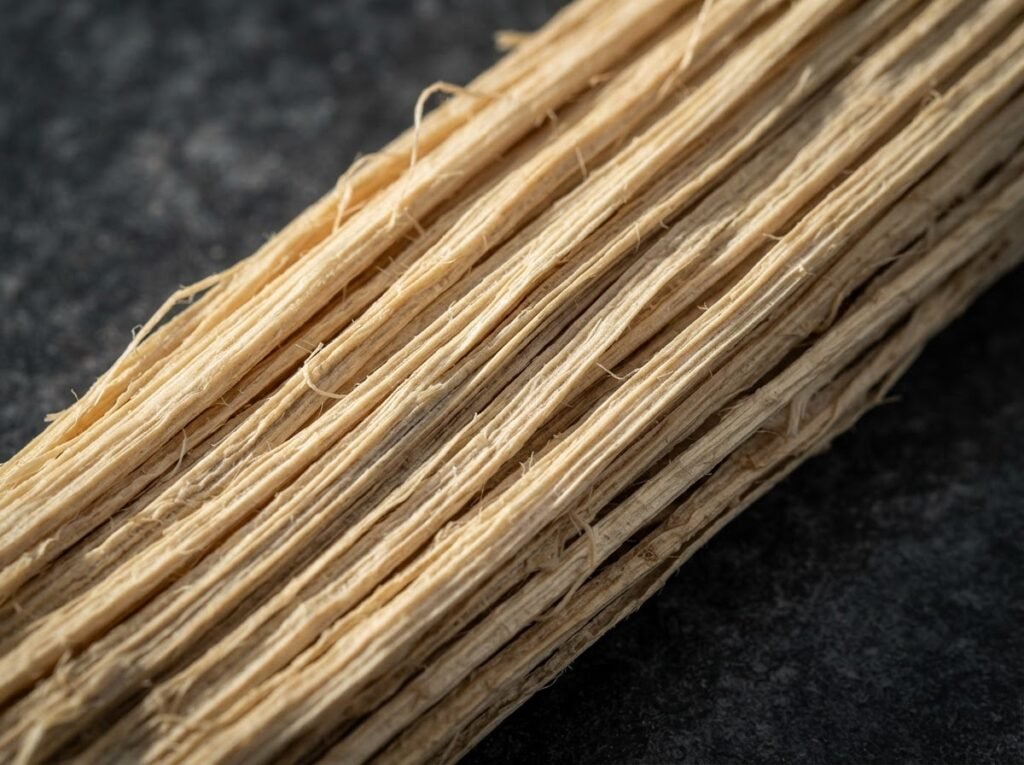
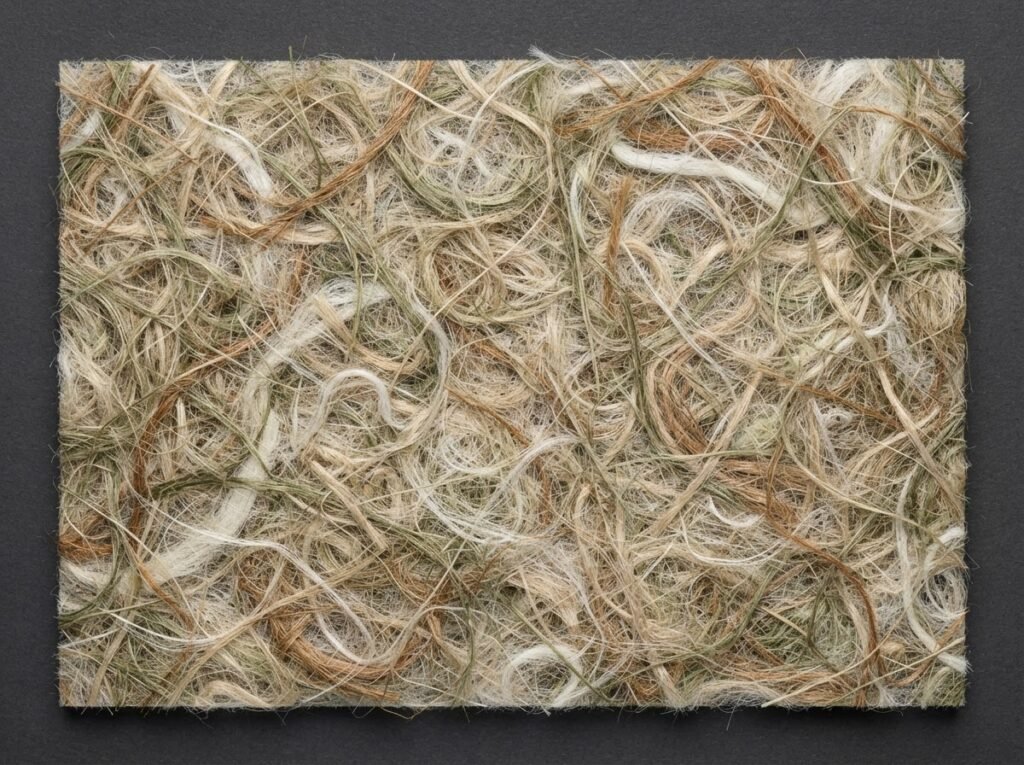
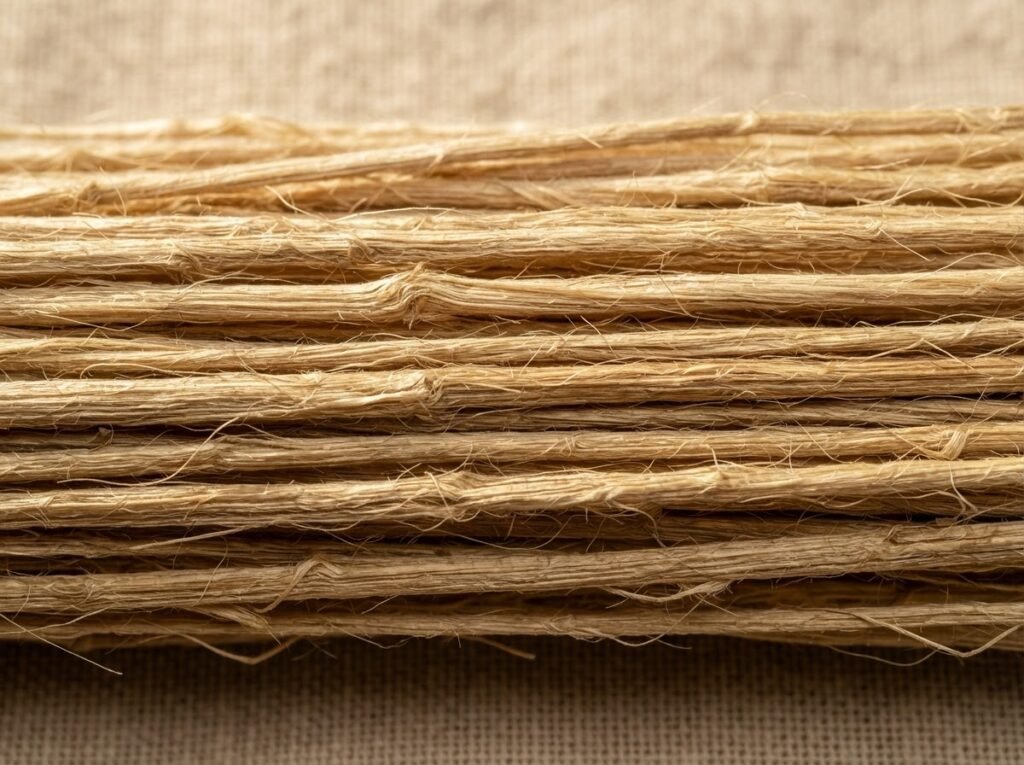
Tenzyle treats composite work as laminate engineering. Fiber selection is the first decision, not the last: hemp where tensile performance governs, coarse bast and banana platforms where bulk stiffness and cost govern.

Fiber–matrix compatibility and moisture behaviour are addressed during formulation rather than discovered during part testing.

Validation is carried out against the partner’s matrix, orientation and process — Tenzyle does not publish laminate performance claims derived from fiber values alone.

Section 04

Performance considerations

Only attributes relevant to this application and supported by available characterization are listed.

Strength

Hemp is the leading structural platform in the portfolio. Tensile data is available on request.

Weight

Natural fiber reinforcement offers a lower-density route than mineral reinforcement.

Durability

Moisture uptake and its effect on laminate performance is a core validation item.

Process compatibility

Reinforcement formats are engineered around the partner’s lay-up and cure route.

Section 05

Potential use cases

Use-case categories under evaluation. Tenzyle does not present these as confirmed commercial deployments.

01

Semi-structural panels

Load-sharing panels currently produced in glass-fiber reinforced polymer.

02

Interior structural substrates

Formed substrates where stiffness-to-weight governs.

03

Equipment housings

Enclosures and covers requiring moderate mechanical performance.

04

Hybrid laminates

Natural fiber plies combined with conventional reinforcement in a single lay-up.

Section 06

Technical validation

Available testing and validation information for this application area.

Hemp tensile performance characterized; technical data available on request.

Banana, coir, bast and bamboo platforms are in validation — no performance values published.

Laminate validation is defined per partner matrix, orientation and process.

Section 07 — Technical brief

Request a technical brief for composites

Share the performance requirement, the process constraint and the target format. We respond with a platform assessment and a proposed validation route.

Application questions

Applying natural fiber materials

What are the applications of natural fiber materials?

Tenzyle works across seven application areas: automotive, packaging, construction, technical textiles, insulation, composites, and wider industrial applications. Platform selection differs by application — hollow-lumen fibers where thermal and acoustic performance at low mass govern, and bast fibers where tensile reinforcement governs.

Primarily in interior substrates, acoustic packages and semi-structural panels. Hollow-fiber platforms address thermal and acoustic functions at very low mass; hemp-based reinforcement is evaluated for load-path components currently specified in glass-fiber reinforced polymer. Part-level validation is defined jointly with the OEM against their acceptance criteria.

Tenzyle publishes use-case categories rather than commercial deployment claims. Where a platform has completed characterization, the measured values and test standards are stated. Application-level and part-level performance is validated with the partner during an engagement.

Anywhere a specification can be defined in measurable terms. If a requirement does not map to one of the seven published application areas, it is handled through the Custom Engineered Blends route, where the specification is the starting point for formulation.