HomeApplicationsAutomotive

Application — Automotive

Mass reduction without a synthetic default

Interior substrates, acoustic packages and semi-structural panels where weight and end-of-life both carry a cost.

Section 01

The application challenge

Vehicle programmes carry two pressures at once: every kilogram removed improves range or consumption, and every material specified now has to answer for its end-of-life and embodied carbon.

Interior substrates, acoustic packages and non-visible trim have historically defaulted to glass-fiber reinforced polymer or petroleum-derived nonwovens. Those systems perform, but they are heavy relative to their function and difficult to separate at end of life.

Any replacement has to survive the same validation gates — dimensional stability, odour and emissions, moisture cycling, and compatibility with existing moulding and assembly lines.


Section 02

Our material approach

Tenzyle states measured values and their test standards. Application-level performance is validated with the partner rather than claimed in advance.

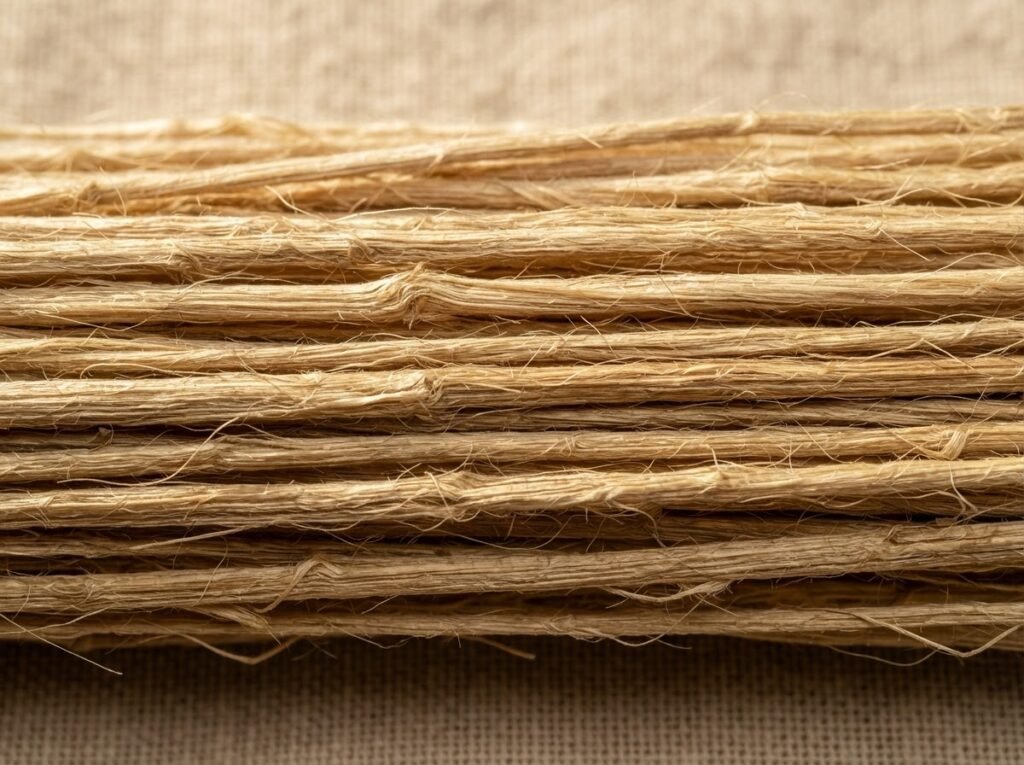
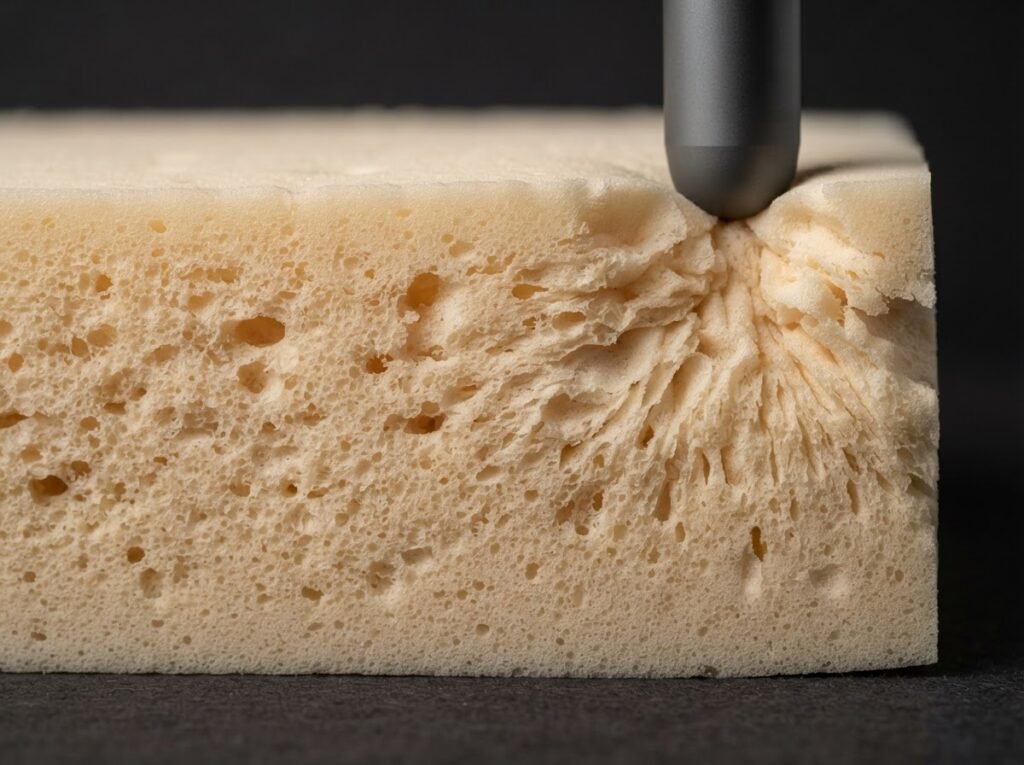
Tenzyle approaches automotive parts function by function rather than as a single material swap. Acoustic and thermal packages are addressed with hollow-lumen platforms where trapped air does the work at very low mass. Semi-structural substrates are addressed with hemp-based reinforcement where tensile performance is the governing requirement.

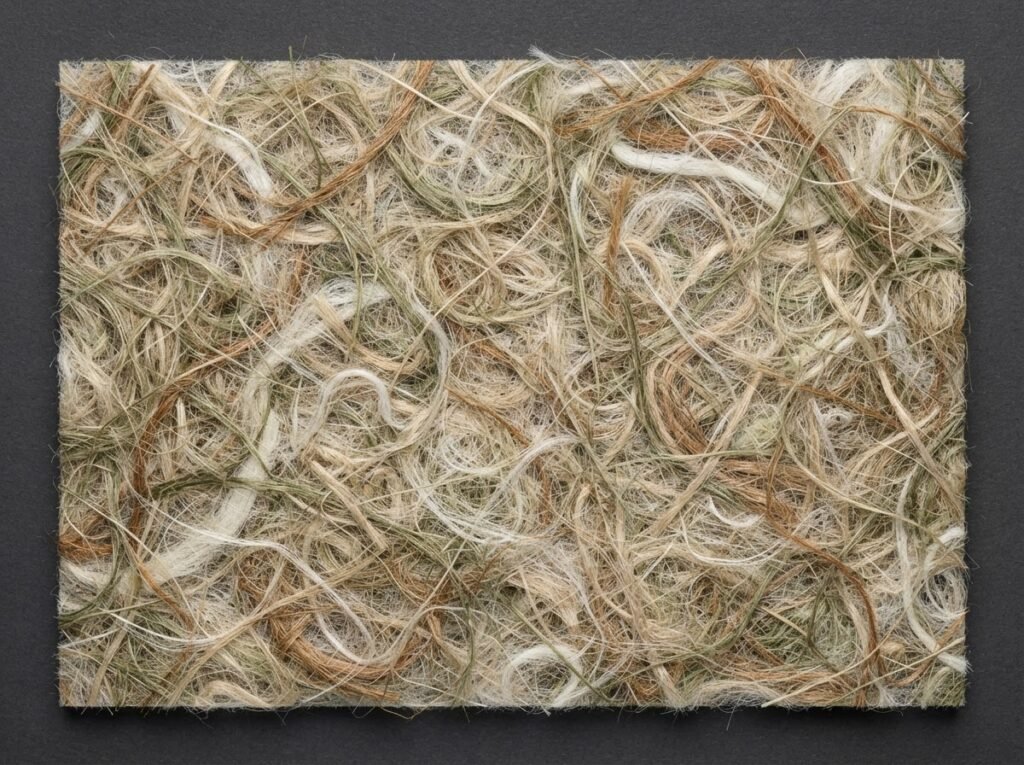
Where neither platform meets the specification alone, a custom blend is formulated against the target values — density ceiling, tensile threshold, thermal figure — and validated at part level rather than fiber level.

Process compatibility is treated as a requirement, not an afterthought. Formats are engineered around the partner’s existing moulding route so that a trial does not require a capital change.

Section 04

Performance considerations

Only attributes relevant to this application and supported by available characterization are listed.

Weight

Low-density hollow-fiber platforms are the primary route to mass reduction in non-structural functions.

Strength

Hemp reinforcement is the platform evaluated for load-path components. Tensile values are available on request.

Acoustic performance

Kapok batt constructions have measured acoustic absorption of NRC 0.85 at 50 mm.

Thermal performance

Measured thermal conductivity of the Kapok platform is 0.031–0.035 W/m·K.

Process compatibility

Formats are engineered around the partner’s existing moulding and assembly route.

Section 05

Potential use cases

Use-case categories under evaluation. Tenzyle does not present these as confirmed commercial deployments.

01

Interior trim substrates

Non-visible door, pillar and headliner substrate where mass and formability govern.

02

Acoustic packages

Absorptive layers in dash, floor and wheel-arch assemblies.

03

Semi-structural panels

Load-sharing panels currently specified in glass-fiber reinforced polymer.

04

Functional seating layers

Cushioning and thermal management layers within seat build-ups.

Section 06

Technical validation

Available testing and validation information for this application area.

Kapok: thermal, acoustic, density and hydrophobicity measured against named standards — full TDS available.

Hemp: tensile performance characterized and published; laminate validation performed per partner matrix and process.

Part-level validation is defined jointly with the OEM against their acceptance criteria. Tenzyle does not publish part performance claims ahead of that work.

Section 07 — Technical brief

Request a technical brief for automotive

Share the performance requirement, the process constraint and the target format. We respond with a platform assessment and a proposed validation route.

Application questions

Applying natural fiber materials

What are the applications of natural fiber materials?

Tenzyle works across seven application areas: automotive, packaging, construction, technical textiles, insulation, composites, and wider industrial applications. Platform selection differs by application — hollow-lumen fibers where thermal and acoustic performance at low mass govern, and bast fibers where tensile reinforcement governs.

Primarily in interior substrates, acoustic packages and semi-structural panels. Hollow-fiber platforms address thermal and acoustic functions at very low mass; hemp-based reinforcement is evaluated for load-path components currently specified in glass-fiber reinforced polymer. Part-level validation is defined jointly with the OEM against their acceptance criteria.

Tenzyle publishes use-case categories rather than commercial deployment claims. Where a platform has completed characterization, the measured values and test standards are stated. Application-level and part-level performance is validated with the partner during an engagement.

Anywhere a specification can be defined in measurable terms. If a requirement does not map to one of the seven published application areas, it is handled through the Custom Engineered Blends route, where the specification is the starting point for formulation.