HomeMaterialsKapok

Material platform — Full TDS Available

Kapok

Ceiba pentandra

A lightweight hollow natural fiber with potential for insulation, acoustic, cushioning and lightweight material applications.

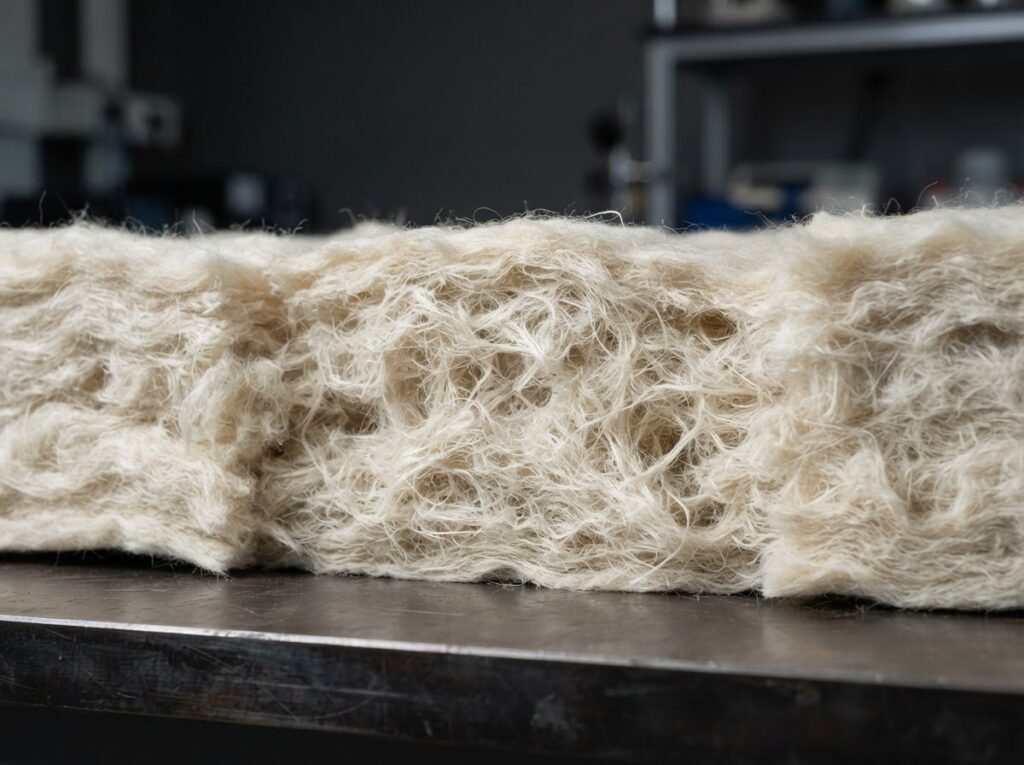
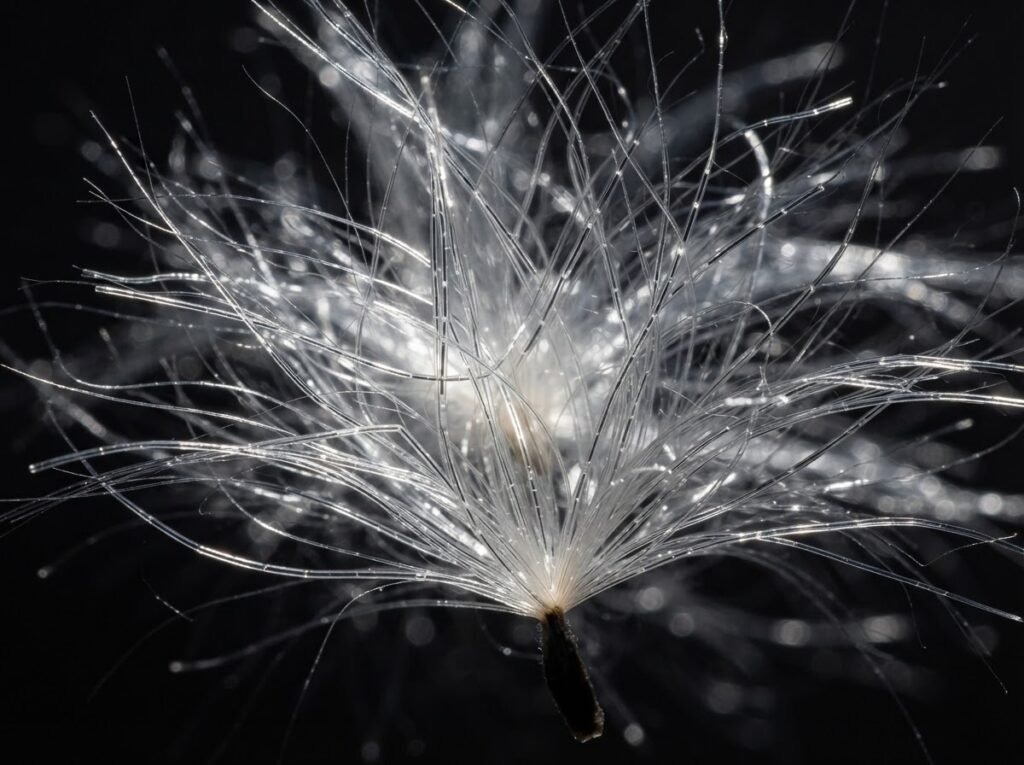
Macro photograph of silky hollow ivory kapok fibers used as a lightweight natural insulation material

Key properties

Development status

Full TDS Available

Section 01

Material overview

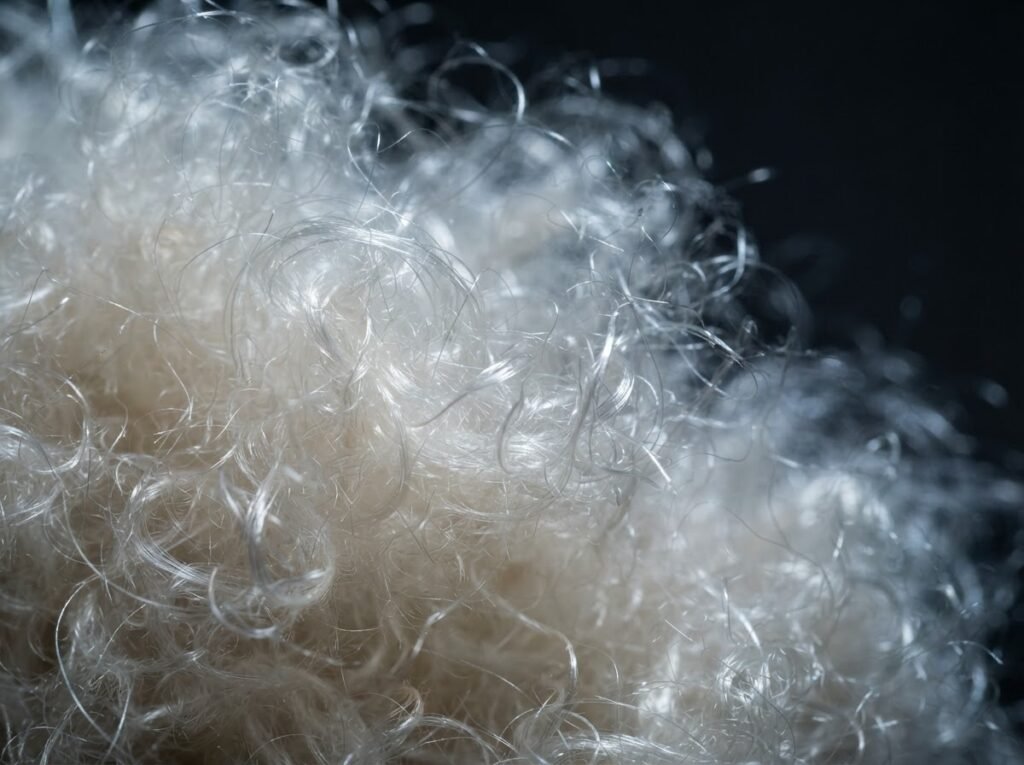
Kapok is a seed-hair fiber harvested from the pods of the Ceiba pentandra tree. Unlike most staple fibers, it is not cultivated as a monoculture crop — pods are collected from trees that grow with minimal intervention, which is central to its resource profile.

Its defining characteristic is structural rather than chemical: a very large internal lumen relative to wall thickness. That hollow architecture is what gives the fiber its low bulk density and its air-trapping behaviour, and it is the property Tenzyle engineers around when the target application is thermal or acoustic.

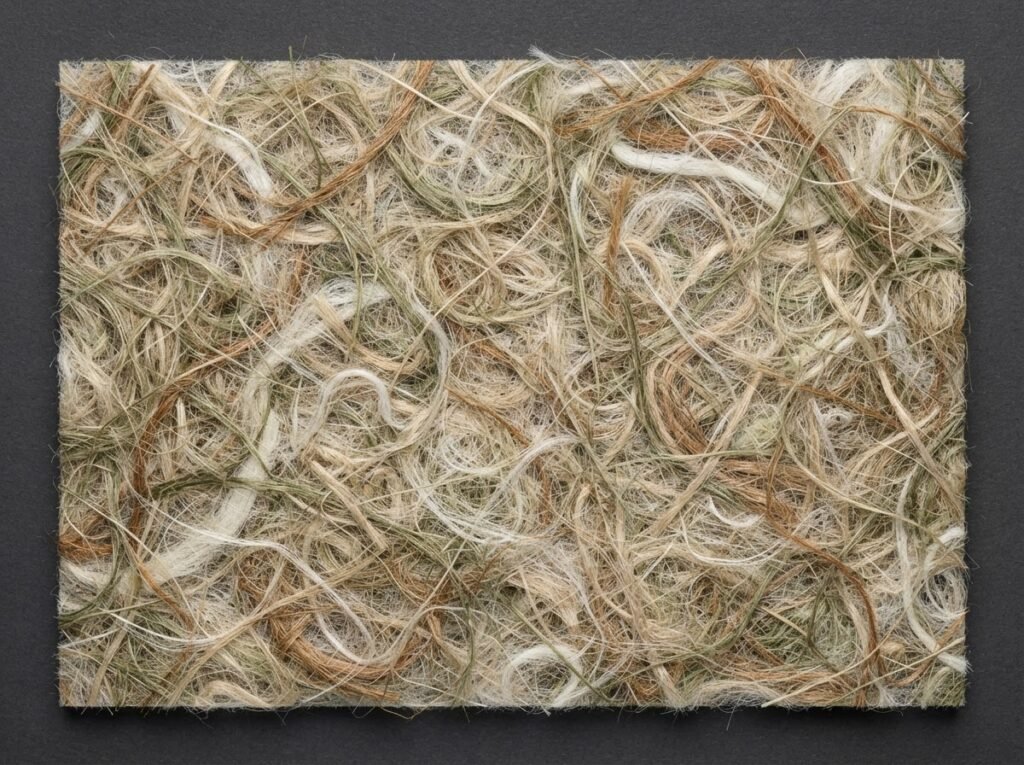
For industrial teams, the relevance of Kapok is therefore weight-driven. Where a specification calls for insulating or damping performance at the lowest possible mass, Kapok is the first platform Tenzyle evaluates — typically as a nonwoven batt or as a blended component rather than as a standalone load-bearing element.

Section 02

Key properties

Only characteristics supported by completed characterization work are listed. Properties still under test are marked as specification to be provided in the table below.

P.01

Hollow lumen structure

A high internal void fraction gives the fiber its air-trapping behaviour, which underpins both its thermal and acoustic characteristics.

P.02

Very low density

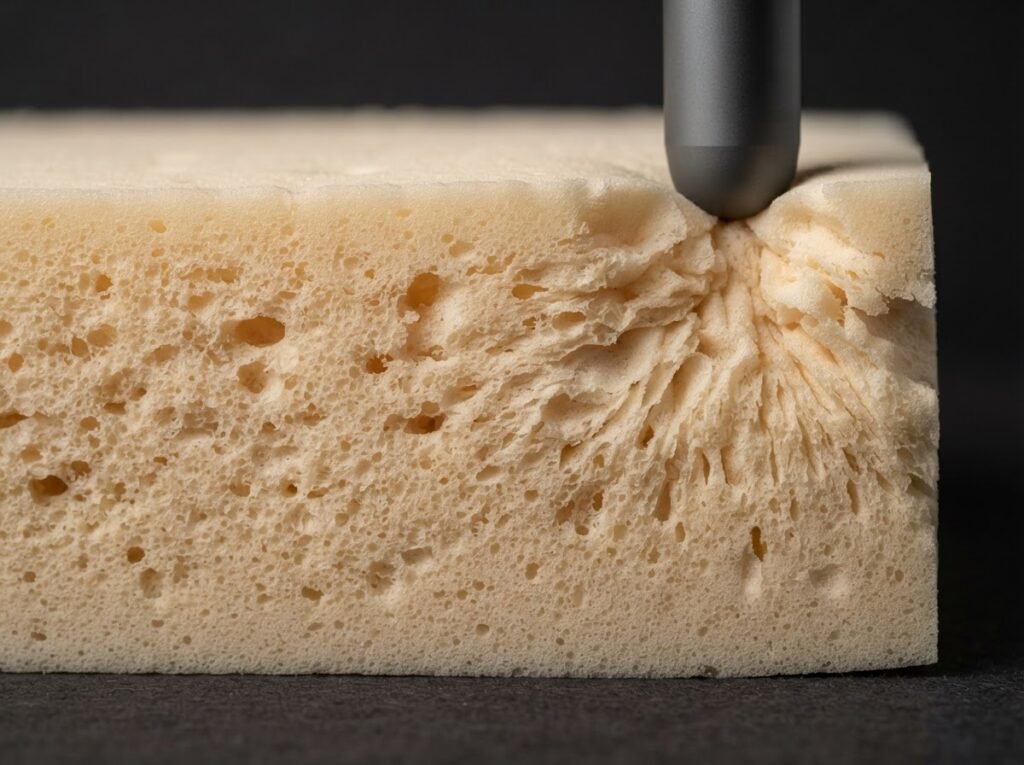
Low specific density enables lightweight formats and favourable performance-to-weight ratios in batt and nonwoven constructions.

P.03

Thermal barrier behaviour

Trapped still air within the lumen is the primary mechanism behind the fiber’s measured thermal conductivity.

P.04

Hydrophobic surface

A naturally water-repellent surface results in low moisture uptake, relevant where wet-state performance is a design consideration.

Section 03

Technical specifications

Values are stated only where testing is complete and a method can be named. Tenzyle does not publish estimated or indicative figures.

Technical parameter

Value

Method / standard

Material type

Natural seed-hair cellulosic fiber

—

Fiber structure

Hollow lumen, 80–86% lumen volume

Optical micro-CT

Specific density

0.29 g/cm³

ASTM D792

Thermal conductivity (λ)

0.031 – 0.035 W/m·K

ISO 8302 / ASTM C518

Acoustic absorption (α)

NRC 0.85 (50 mm batt)

ISO 10534-2

Hydrophobicity angle

> 120°

ASTM D7334

Fiber length

Technical specification to be provided.

—

Mechanical performance

Technical specification to be provided.

—

Where a parameter reads “Technical specification to be provided”, characterization for that property is either in progress or scoped to a partner engagement.

Section 04

Performance & validation

Kapok is the most characterized platform in the portfolio. Thermal, acoustic, density and surface behaviour have been measured against recognised test standards and are published in the technical data sheet.

Full TDS Available
Development stage

Density, thermal conductivity, acoustic absorption and hydrophobicity measured against named standards.

Lumen volume confirmed by optical micro-CT imaging.

Mechanical and fiber-length characterization is ongoing; values are not published until testing is complete.

Section 06

Available formats

Fiber

Nonwoven

Blend

Format availability is confirmed at engagement level. Volumes and lead times are quoted against a defined specification.

Section 07

Technical data

Kapok Technical Data Sheet

The full technical data sheet lists measured values with the test standard applied to each. It is released on request to technical and procurement teams.

Section 08 — Custom engineering

Need a specific performance profile?

Share your application and performance requirements with our team.

Technical questions

How to read Tenzyle material data

What is a Technical Data Sheet?

A Technical Data Sheet (TDS) is a document listing a material’s measured properties, the test standard each value was measured against, and the conditions of the test. A TDS is what allows an engineering team to specify a material. Tenzyle publishes a TDS only for platforms where testing is complete.

In Validation means characterization and testing work is in progress for that platform and performance values have not yet been finalised. Technical data for platforms in validation is shared on request under a technical engagement, with the state of the work made explicit.

Natural fiber composites are materials in which a natural fiber provides the reinforcement phase within a polymer matrix. Composite performance is a laminate property — it depends on the fiber, the matrix, the fiber orientation and the processing route — so Tenzyle validates at laminate level rather than deriving part performance from fiber values alone.

Material validation is the process of confirming that a material meets defined acceptance criteria under the conditions of its intended application. It differs from characterization, which establishes what a material’s properties are. Validation establishes whether those properties are sufficient for a specific use.