Tenzyle Advanced Materials LLP — Engineered Fiber Platforms

Engineering Natural Materials for Advanced Applications

Tenzyle Advanced Materials develops sustainable, high-performance material platforms from natural fibers and bio-based resources for manufacturers, OEMs, R&D teams and industrial partners.

9

Material platforms

0.29

g/cm³ — Kapok density

900

MPa — Hemp tensile strength

~20yr

NITRA validation programme

01 — What Tenzyle does

Natural materials.
Engineered for performance.

Tenzyle explores natural fibers and bio-based resources through research, processing, engineering, testing and validation to develop material solutions for real-world industrial applications.

The distinction matters commercially. A raw fiber is a commodity with variable properties. An engineered material platform is a specified format with measured values, a named test standard behind each one, and a processing route that a manufacturing team can actually run.

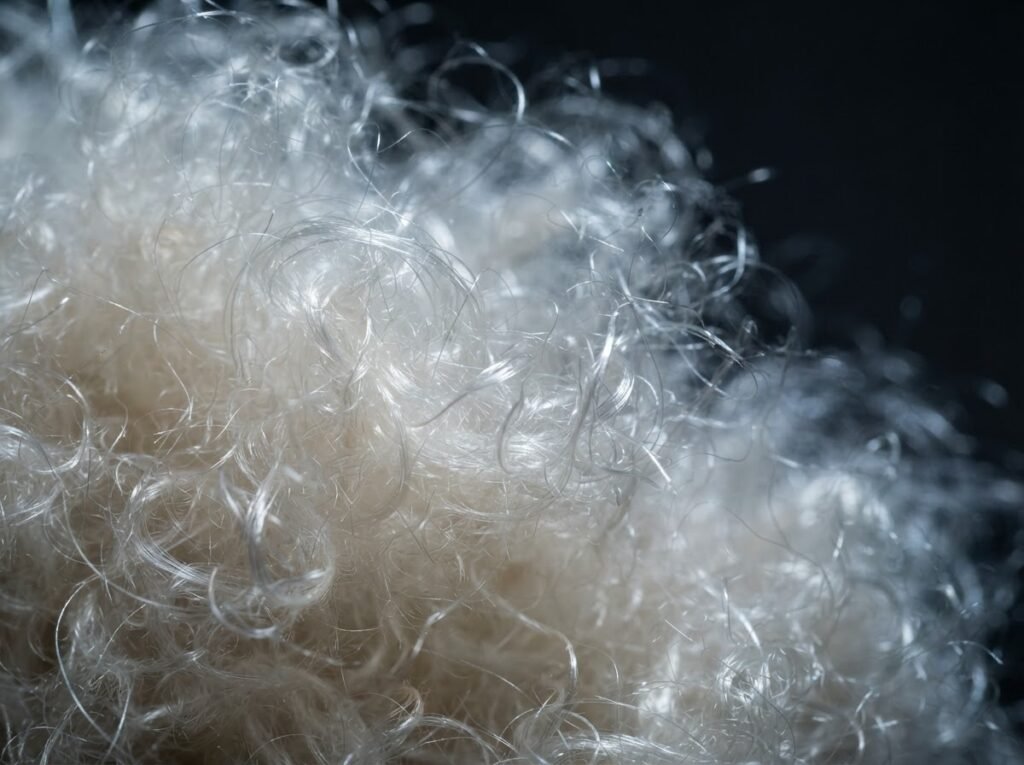
Macro photograph of silky hollow ivory kapok fibers used as a lightweight natural insulation material

Fig. 01 — Hollow-lumen fiber morphology. Lumen volume 80–86% (optical micro-CT).

02 — Material platforms

Material Platforms

Exploring the potential of natural and bio-based materials through engineering and validation.

Macro photograph of silky hollow ivory kapok fibers used as a lightweight natural insulation material
2.1

Kapok

Hollow-lumen fiber studied for acoustic and thermal barrier applications where low density is the governing constraint.

LightweightHollow FiberInsulation

Full TDS Available
View material
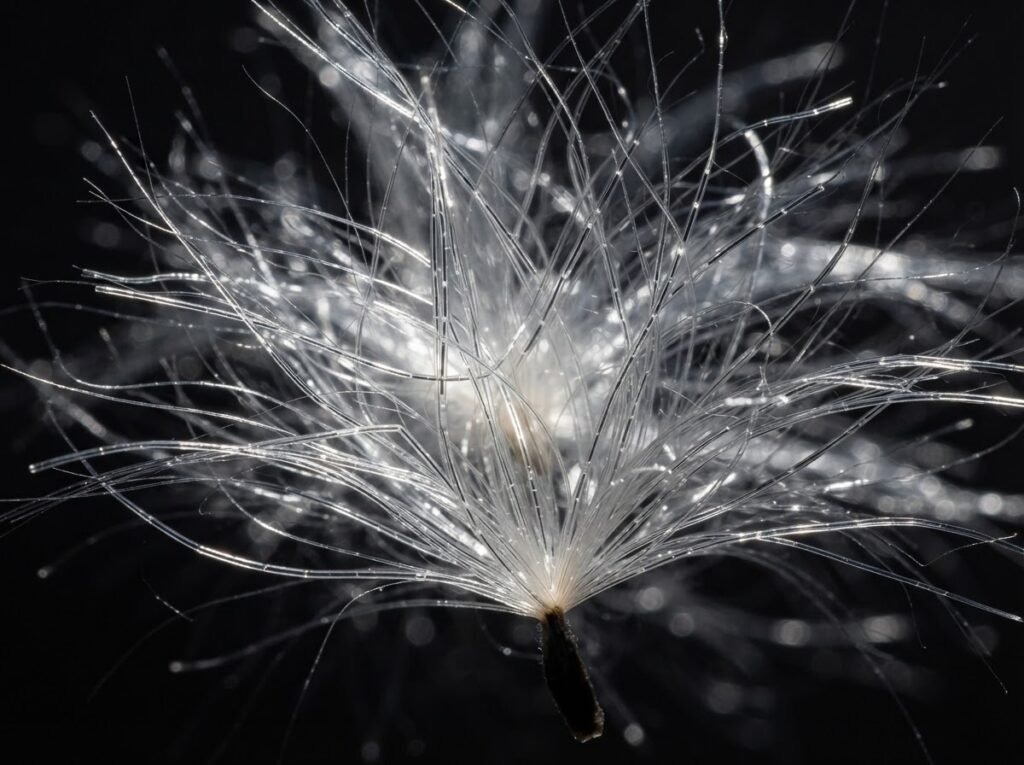
Backlit macro photograph of fine hollow milkweed floss fibers showing translucent lumen cores
2.2

Milkweed — Closed Cell™

Hollow-core architecture validated over two decades with NITRA. Finer than pashmina, effective in extreme cold.

LightweightHollow StructureInsulation

In Validation
View material
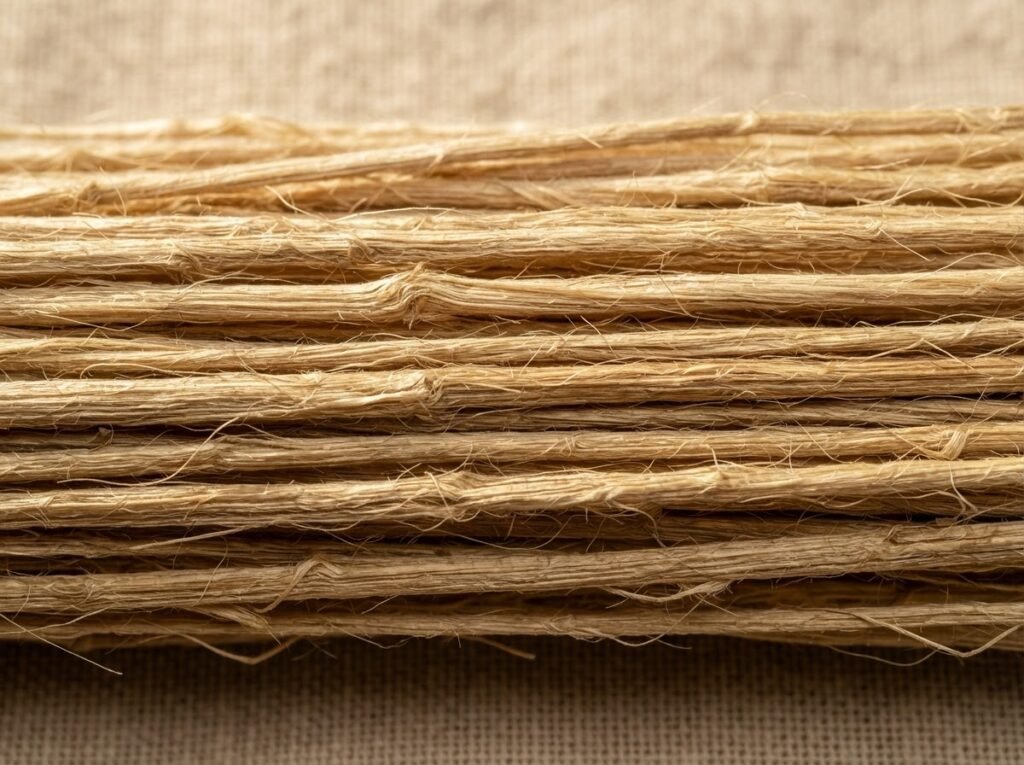
Macro photograph of aligned golden industrial hemp bast fiber bundles
2.3

Hemp

High-tensile structural bio-composite reinforcement — tensile strength up to 900 MPa for load-bearing applications.

StrengthReinforcementComposite Potential

Full TDS Available
View material
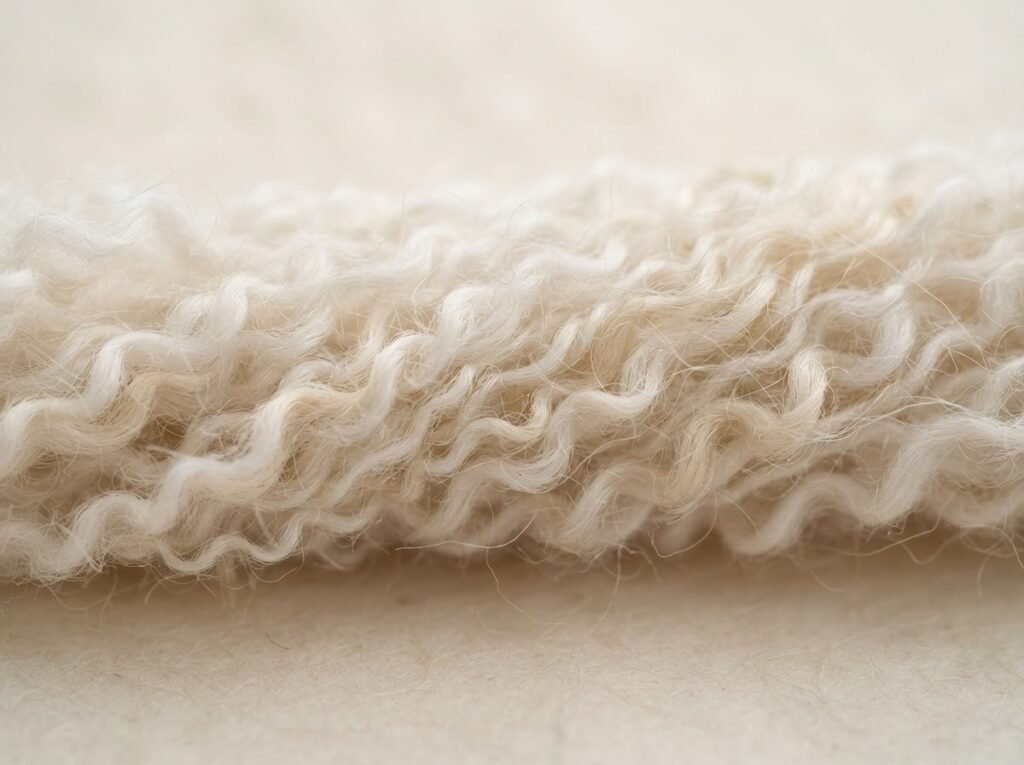
Macro photograph of soft crimped organic cotton staple fiber in a carded sliver
2.4

Organic Cotton

Certified organic staple fiber used as a blending base for Closed Cell™ yarns and technical textiles.

Natural FiberTextile CompatibilityBlend Potential

Full TDS Available
View material
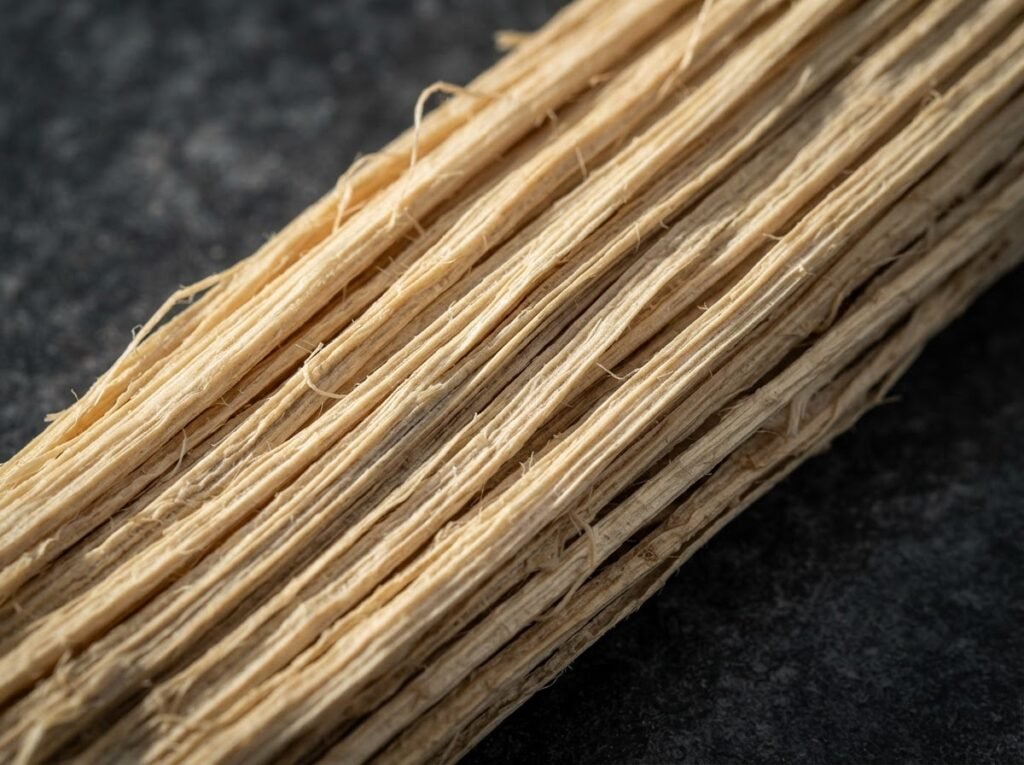
Macro photograph of coarse straw-coloured banana pseudo-stem fiber bundles
2.5

Banana Fiber

Agricultural by-product fiber under assessment for structural composite and nonwoven reinforcement applications.

Natural FiberAgricultural ResourceReinforcement

In Validation
View material
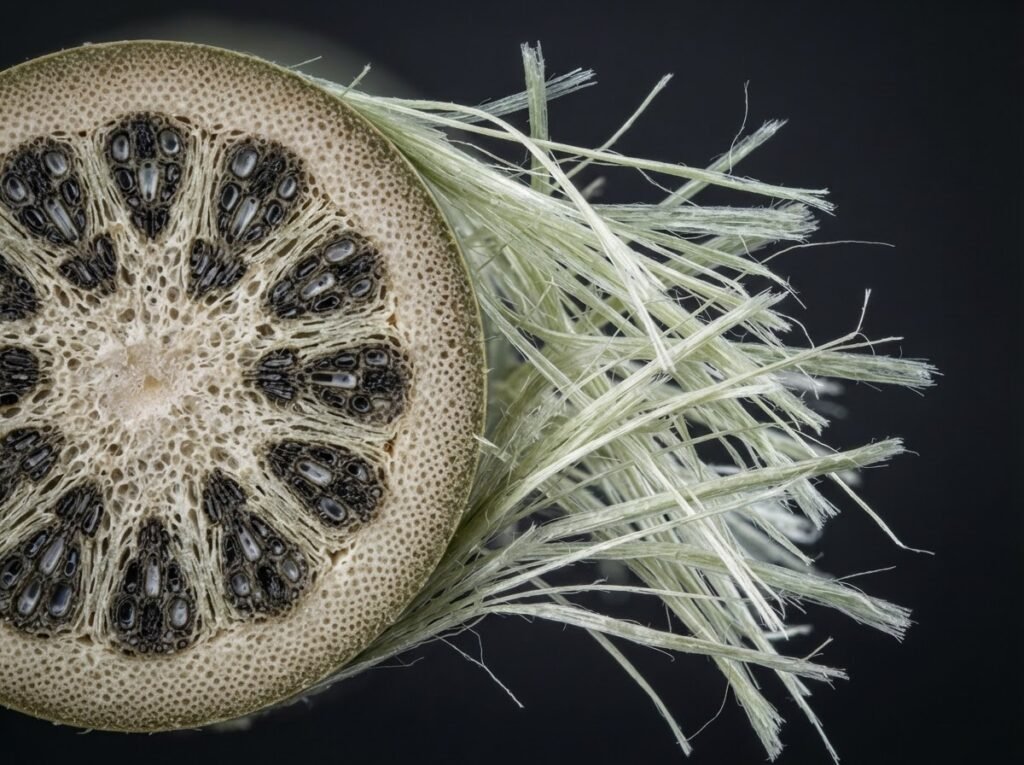
Bamboo cellulose fiber strands beside a bamboo culm cross-section
2.6

Bamboo

Fast-renewing woody grass fiber under study for its natural antimicrobial properties and rapid regeneration cycle.

RenewableNatural FiberComposite Potential

In Validation
View material
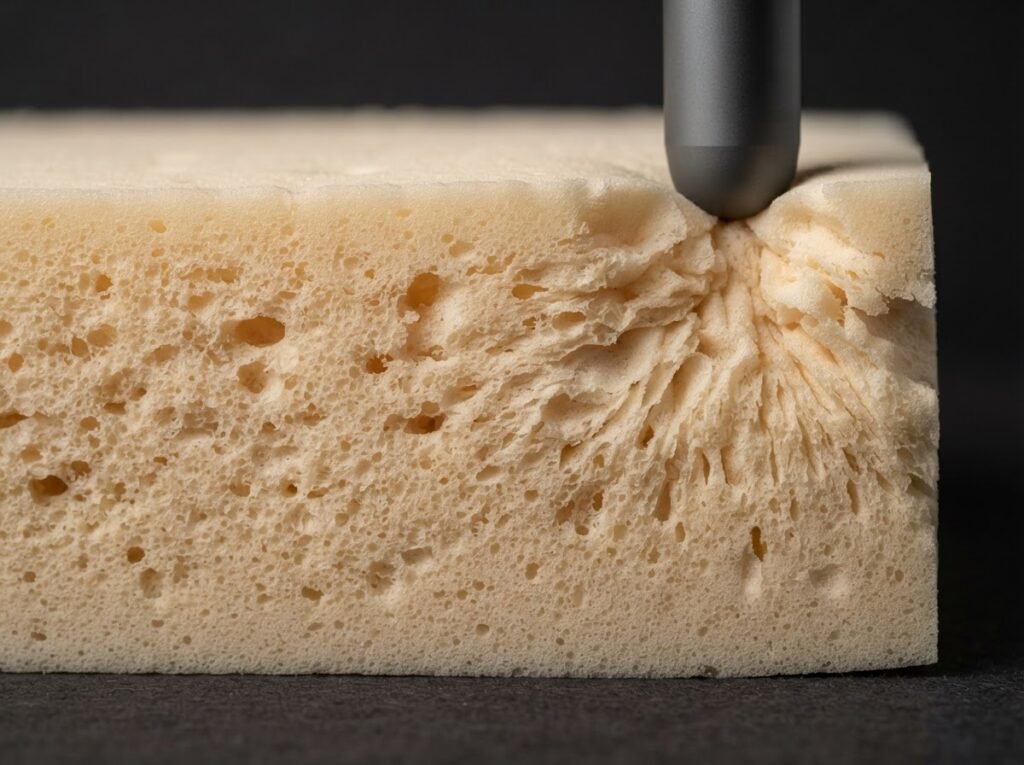
Close-up of a pale amber natural latex open-cell foam block
2.7

Natural Latex

Renewable elastomeric input used for cushioning, damping and flexible composite constructions.

ElasticityFlexibilityCushioning

Full TDS Available
View material
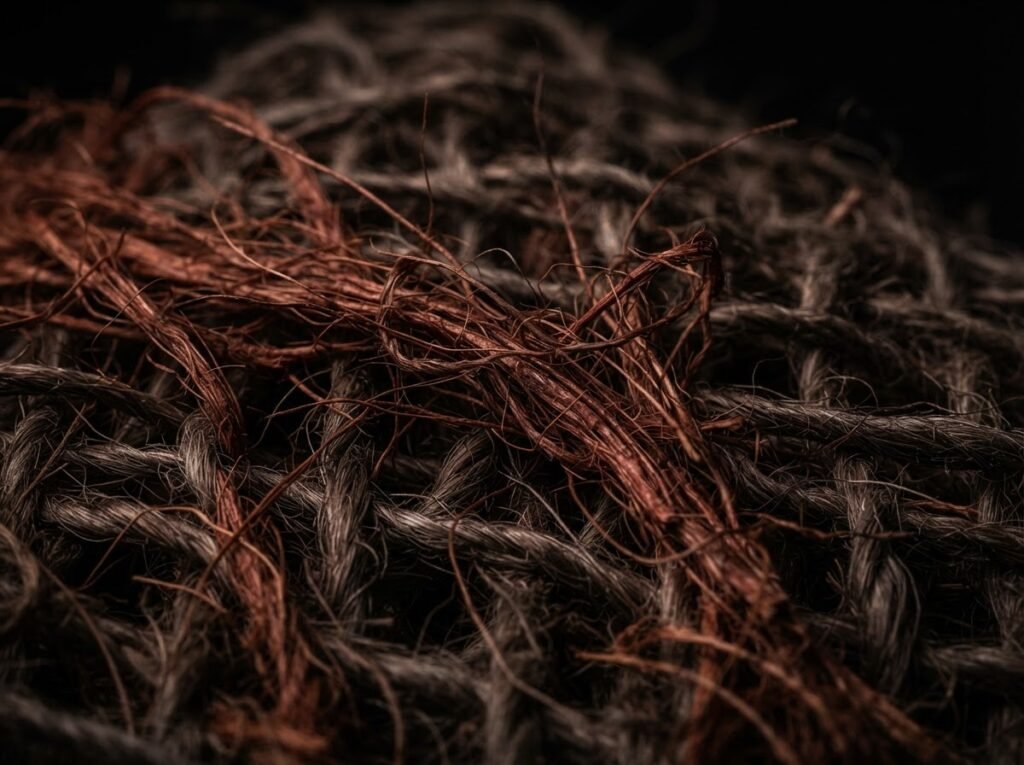
Coarse reddish-brown coir fibers intermixed with darker bast strands
2.8

Coir & Bast Fibres

Coarse, durable fibers under assessment for geotextile, matting and industrial packaging applications.

DurabilityReinforcementIndustrial Potential

In Validation
View material
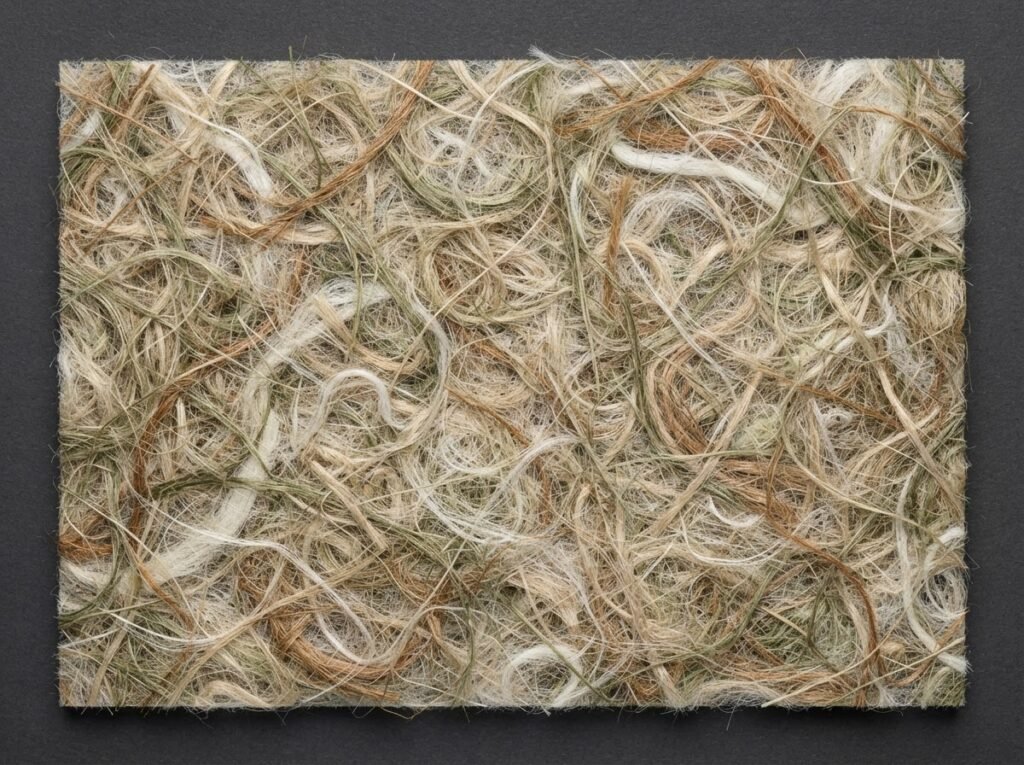
Multiple natural fiber types intermingled into a single engineered nonwoven web
2.9

Custom Engineered Blends

Fiber combinations formulated to an OEM’s target density, tensile and thermal specification.

Custom FormulationPerformance OptimizationApplication Specific

Enterprise Engagement
View material

03 — Workflow

From natural fiber to engineered material

Six stages, each one narrowing variation. A property is only published once it has been measured against a named standard.

Stage 01 / 06

Natural Resource

Feedstock selection starts with traceability and consistency. Wild-collected and agricultural by-product streams are mapped individually — species, grade and season all affect what the fiber will do downstream.

Stage 02 / 06

Processing & Research

Extraction and cleaning routes are compared before any property is measured, because processing method is frequently the largest source of variation in a natural fiber.

Stage 03 / 06

Engineering & Blending

Platforms are combined and constructed toward a target specification — density, tensile, thermal — with the partner’s processing route treated as a formulation constraint.

Stage 04 / 06

Testing & Validation

Properties are measured against named standards. Values that have not been tested are not published — they are recorded as specification to be provided.

Stage 05 / 06

Application-Ready Material

The output is a format, a specification and the test data behind it — not a raw commodity fiber.

Stage 06 / 06

Industrial Partner

Part-level and construction-level validation is completed jointly against the partner’s acceptance criteria.

04 — Applications

Materials designed around real-world applications

Platform selection changes with the requirement. Thermal and acoustic functions lead to hollow-lumen fibers; load paths lead to bast fibers.

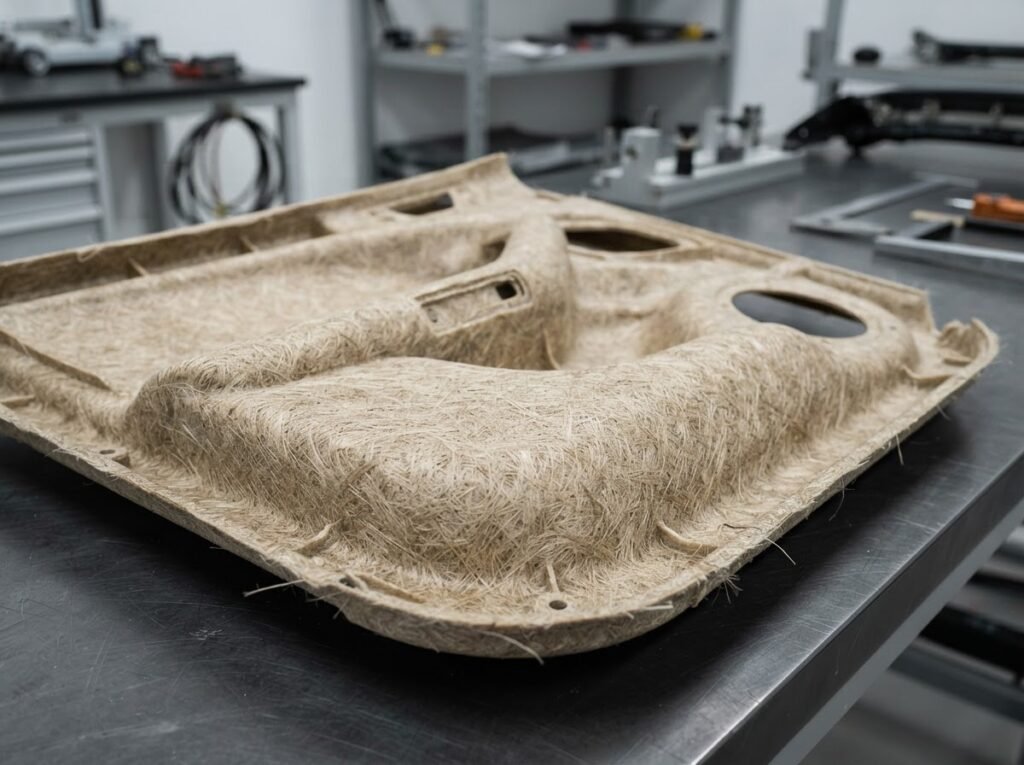
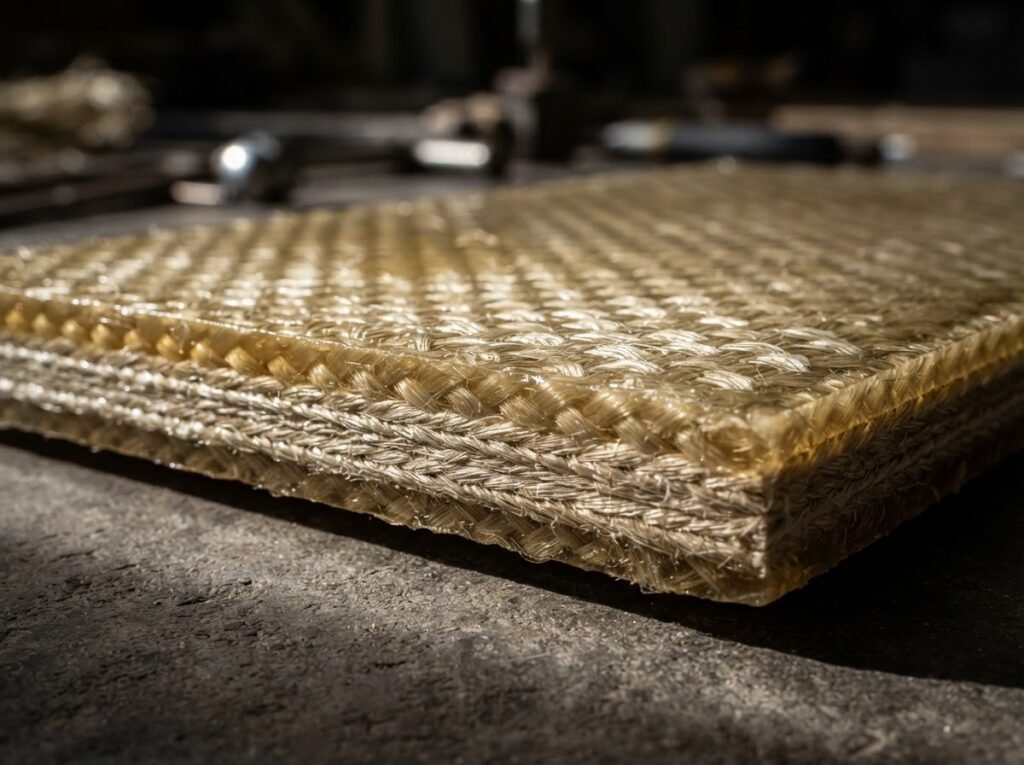
Molded natural fiber composite automotive door panel substrate

Automotive

Interior substrates, acoustic packages and semi-structural panels where weight and end-of-life both carry a cost.

Relevant platforms

Kapok · Hemp · Milkweed · Natural Latex

Explore application
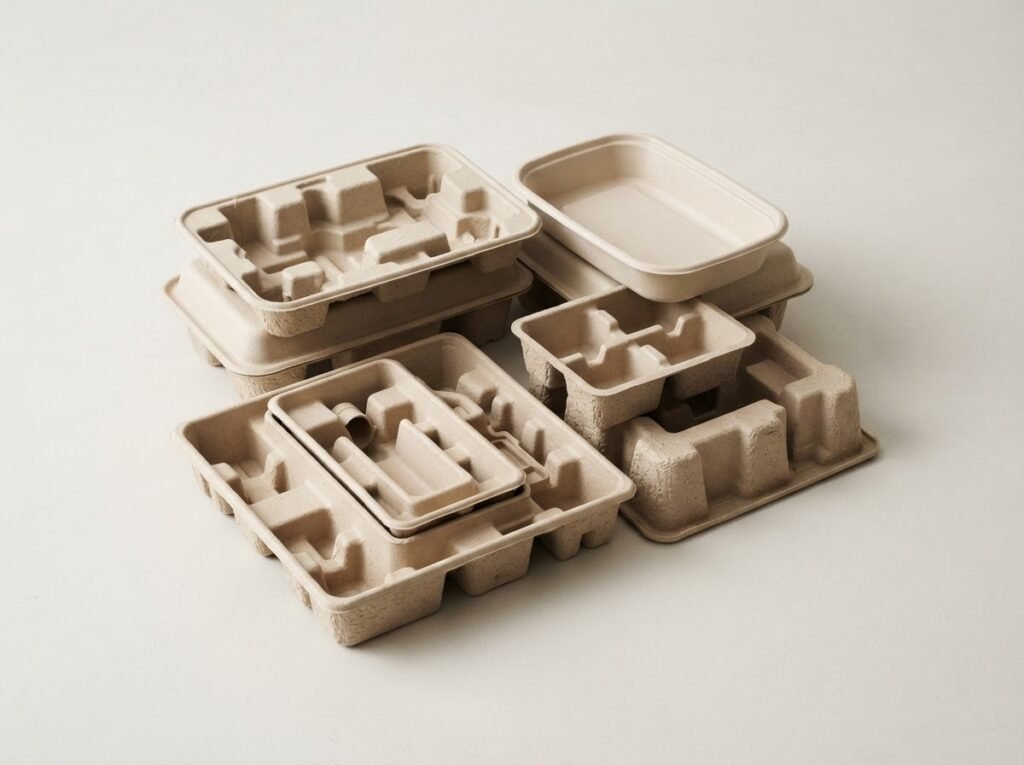
Stacked molded natural fiber protective packaging trays and inserts

Packaging

Moulded protective formats and cushioning layers for products that need protection without a synthetic foam.

Relevant platforms

Kapok · Coir & Bast · Banana Fiber · Milkweed

Explore application
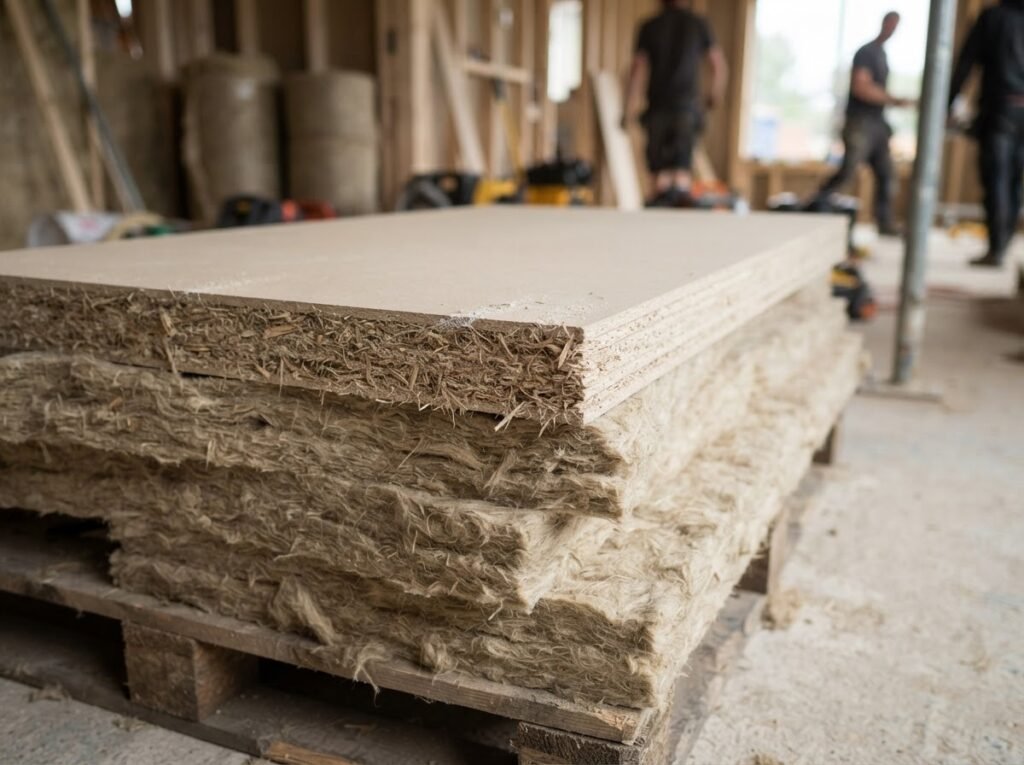
Natural hemp fiber insulation batts and pressed bio-composite building boards

Construction

Insulation, bio-composite boards and reinforcement formats for buildings measured on embodied carbon.

Relevant platforms

Hemp · Coir & Bast · Bamboo · Kapok

Explore application
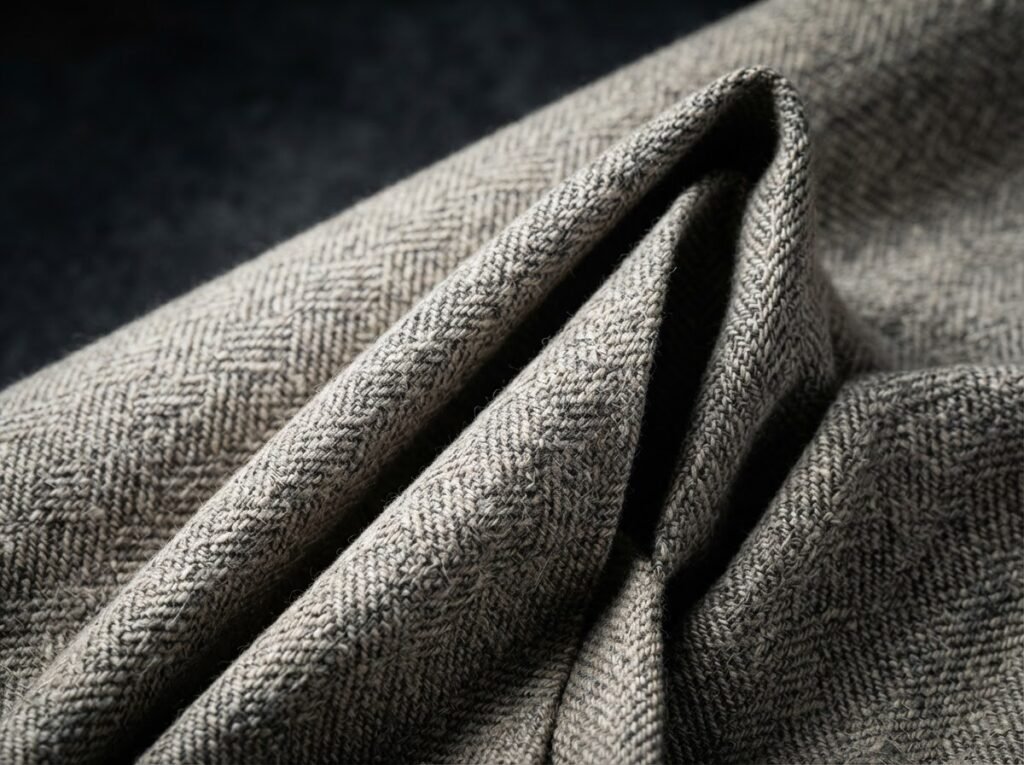
Tightly woven natural fiber technical textile in ecru and charcoal yarns

Technical Textiles

Yarns, nonwovens and engineered fabrics where the performance comes from fiber architecture.

Relevant platforms

Milkweed · Organic Cotton · Kapok · Bamboo

Explore application
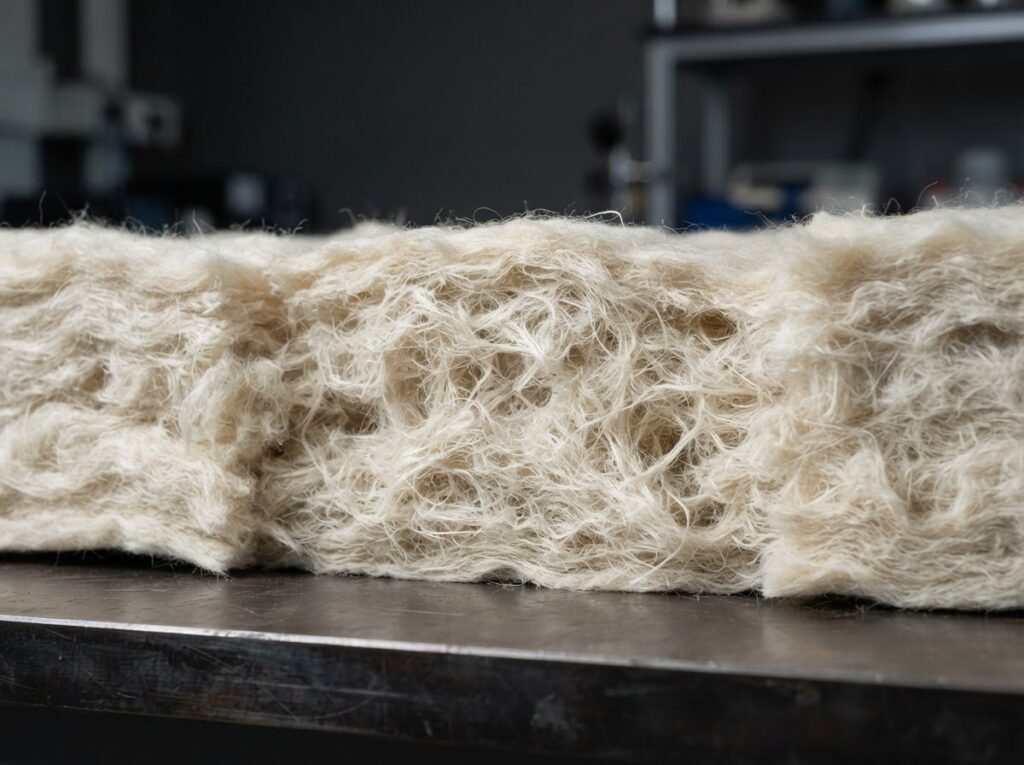
Lofted natural hollow-fiber thermal insulation batt with a cut cross-section

Insulation

Batt, web and fill formats where trapped still air — not an additive — does the insulating work.

Relevant platforms

Kapok · Milkweed · Organic Cotton · Natural Latex

Explore application
Natural fiber reinforced composite laminate in a bio-resin matrix

Composites

Natural fiber reinforcement for bio-based and conventional matrix systems in load-bearing parts.

Relevant platforms

Hemp · Banana Fiber · Coir & Bast · Bamboo

Explore application
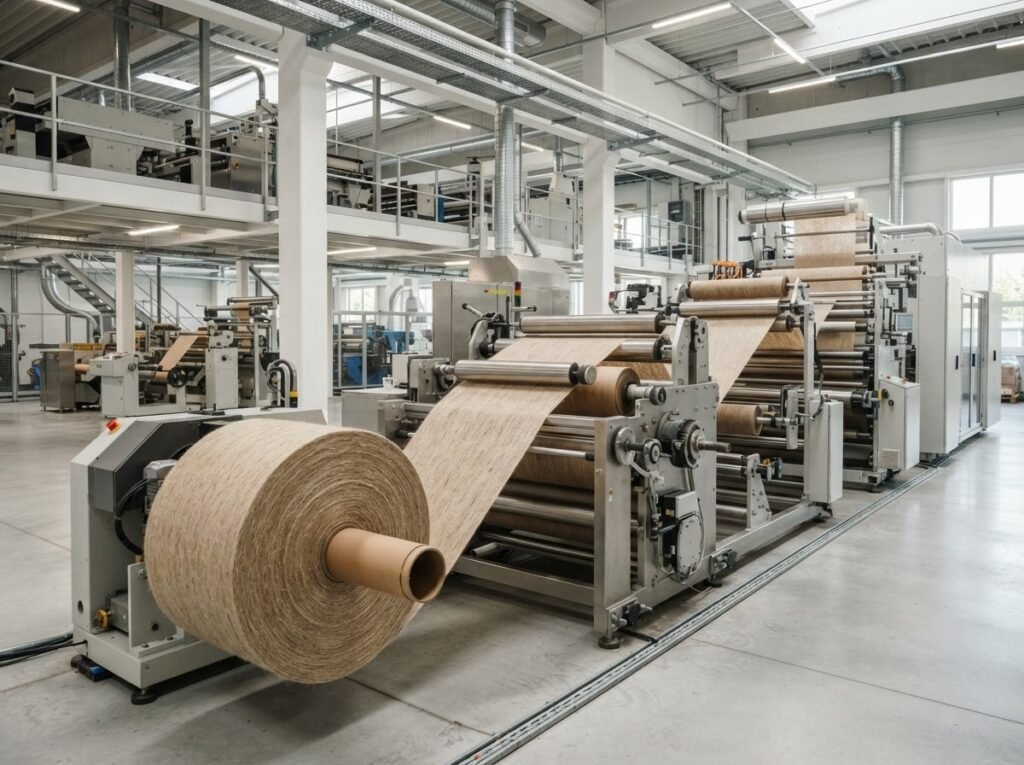
Engineered natural fiber nonwoven webs on an industrial processing line

Industrial Applications

Filtration, geotextile, agricultural and process applications addressed through custom formulation.

Relevant platforms

Custom Blends · Hemp · Coir & Bast · Kapok

Explore application

Not listed?

Bring the specification. We formulate to it.

Requirements that do not map to a category are handled through the Custom Engineered Blends route.

Start a technical brief →

05 — R&D

Where natural materials meet material science

Tenzyle combines natural material resources with research, engineering, testing and validation to explore their potential for demanding applications.

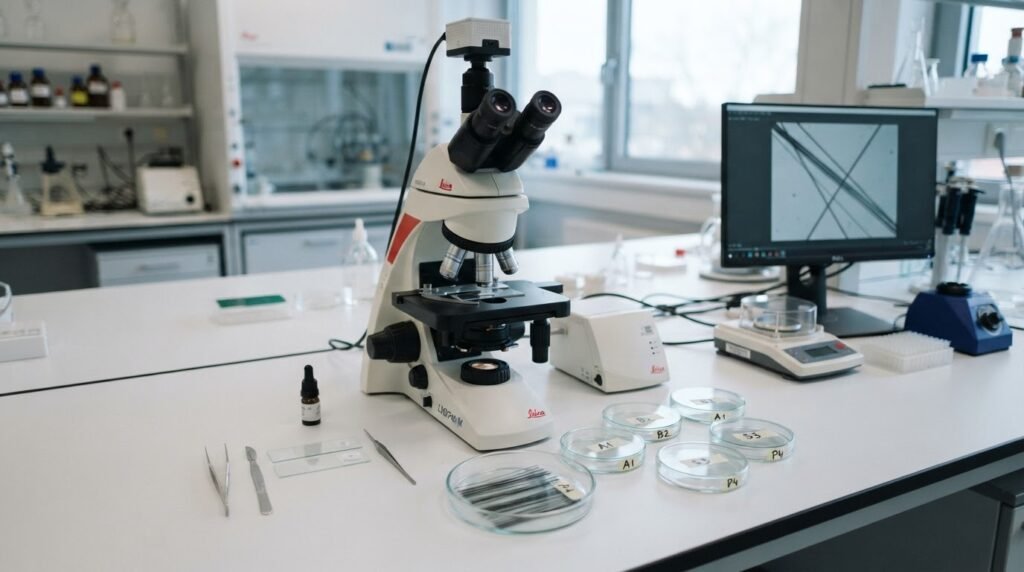
Material science laboratory bench with optical microscope and labelled fiber samples

Material Research

Feedstock screening and structural assessment to establish whether a natural resource is technically relevant to a defined application class.

Material Characterization

Fiber architecture, density, lumen volume, fineness and length distribution measured under controlled processing conditions.

Testing

Thermal, acoustic, mechanical and moisture testing against named standards — ISO 8302, ASTM C518, ISO 10534-2, ASTM D792, ASTM D7334.

Validation

Performance confirmed against application-level acceptance criteria defined jointly with the partner before testing begins.

06 — Custom engineering

Have a material challenge?

Tell us what you need to achieve. Tenzyle can explore suitable material platforms or custom engineered solutions based on your technical, performance and application requirements.

Multiple natural fiber types intermingled into a single engineered nonwoven web

07 — Collaboration

Built for collaboration

Tenzyle operates as a technical partner rather than a supplier. Each engagement begins with a specification and ends with a validated material and its data package.

OEMs

Manufacturers

R&D Teams

Product Developers

Industrial Partners

Research Institutions

Answers

What Tenzyle does, in plain terms

What does Tenzyle Advanced Materials do?

Tenzyle Advanced Materials is a material science and engineering company that develops natural fibers and bio-based resources into engineered material platforms for industrial applications. The work spans research, processing, characterization, blending, testing and validation. Tenzyle is not a raw fiber supplier — the output of an engagement is a specified material format with a supporting technical data package.

Nine material platforms: Kapok, Milkweed (Closed Cell™), Hemp, Organic Cotton, Banana Fiber, Bamboo, Natural Latex, Coir & Bast Fibres, and Custom Engineered Blends. Kapok, Hemp, Organic Cotton and Natural Latex have full technical data sheets available. Milkweed, Banana Fiber, Bamboo and Coir & Bast Fibres are in validation. Custom Engineered Blends are developed under enterprise engagement.

Advanced natural materials are natural or bio-based inputs that have been characterized, processed and engineered to meet a defined technical specification, rather than supplied as a commodity. The distinction is the presence of measured property data and a controlled processing route — which is what allows an engineering team to specify the material with confidence.

Through a defined sequence: feedstock selection, processing and characterization, application-specific engineering and blending, testing against named standards, and validation against the partner’s acceptance criteria. Each stage narrows variation. The final stage produces an application-ready format with published or engagement-specific technical data.
Yes. Custom Engineered Blends is a dedicated platform. A partner provides target values — a density ceiling, a tensile threshold, a thermal figure, a process constraint — and Tenzyle formulates toward that specification using portfolio platforms and, where required, compatible conventional fibers. Closed Cell™ Milkweed has been blended with cotton, silk, wool and recycled polyesters into yarns up to 30 counts.

Through the technical brief form. Technical data sheets are released for characterized platforms, and engagement-specific data is shared under a technical discussion. Where a property has not been tested, Tenzyle records it as specification to be provided rather than publishing an estimate.

Technical engagement

Let’s engineer the next material solution.

Share your application, performance requirements or material challenge with our team.