HomeApplicationsInsulation

Application — Insulation

Thermal performance engineered by geometry

Batt, web and fill formats where trapped still air — not an additive — does the insulating work.

Section 01

The application challenge

Insulation is a mass-and-volume problem. The performance figure is straightforward to measure; achieving it at low weight, low thickness and acceptable cost is not.

Synthetic fills dominate because their behaviour is consistent and their processing is understood. Natural alternatives are often heavier, bulkier, or lose performance when damp.

Wet-state behaviour is the recurring failure mode for natural insulation materials, and it is frequently under-tested.

Section 02

Our material approach

Tenzyle states measured values and their test standards. Application-level performance is validated with the partner rather than claimed in advance.

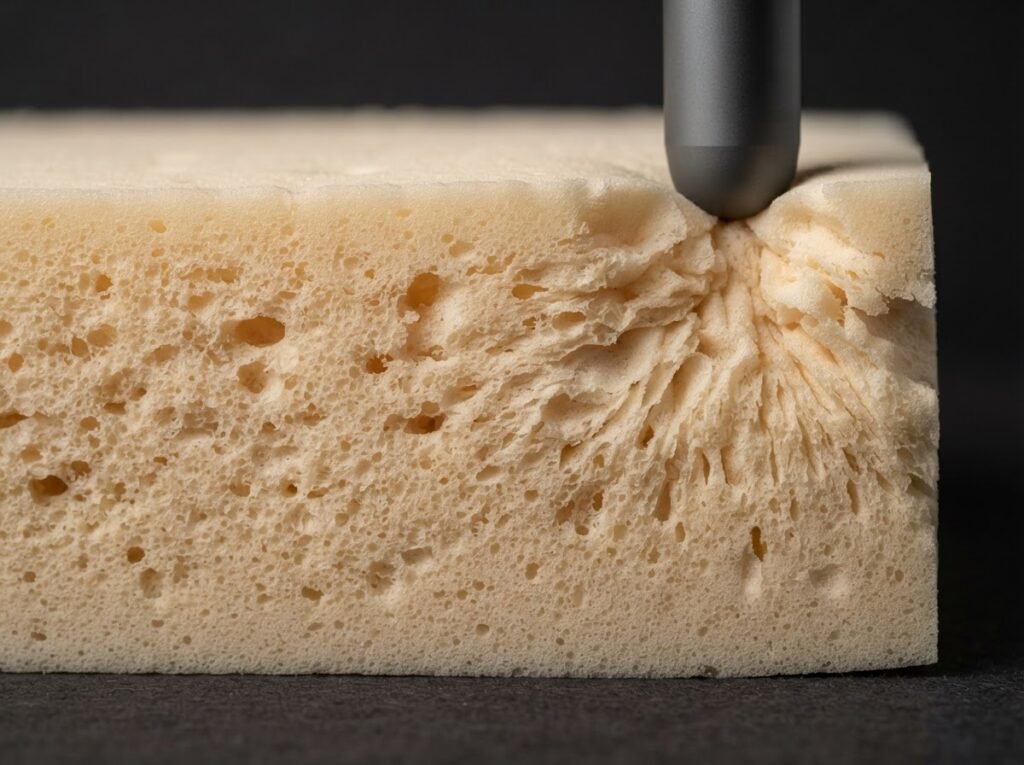
Both of Tenzyle’s primary insulation platforms work the same way: a hollow internal structure traps still air. The insulating function is geometric, so it does not wash out, migrate or degrade the way an applied treatment can.

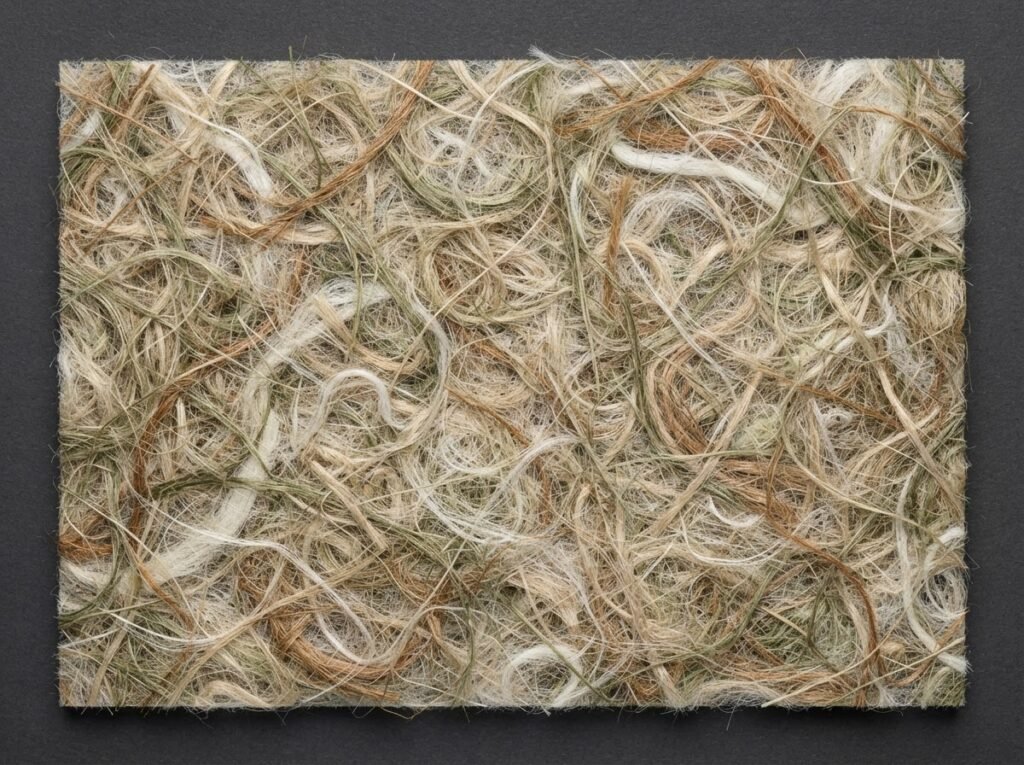
Kapok is the most characterized option — density, thermal conductivity, acoustic absorption and hydrophobicity have all been measured against named standards.

Closed Cell™ Milkweed is the platform under active validation for extreme cold, characterized as effective to −20°C with work extending toward −40°C.


Section 04

Performance considerations

Only attributes relevant to this application and supported by available characterization are listed.

Thermal performance

Kapok measured at 0.031–0.035 W/m·K (ISO 8302 / ASTM C518).

Weight

Kapok specific density of 0.29 g/cm³ (ASTM D792) supports very low system mass.

Acoustic performance

Kapok batt measured at NRC 0.85 at 50 mm thickness (ISO 10534-2).

Durability

Hydrophobicity angle > 120° (ASTM D7334) indicates low moisture uptake.

Section 05

Potential use cases

Use-case categories under evaluation. Tenzyle does not present these as confirmed commercial deployments.

01

Cold-weather apparel fill

Insulating fill layers for technical and expedition outerwear.

02

Building insulation batts

Cavity and roof insulation in fiber batt formats.

03

Appliance and equipment insulation

Thermal barrier layers in enclosed equipment.

04

Transport thermal packages

Insulating layers in vehicle and transit applications.

Section 06

Technical validation

Available testing and validation information for this application area.

Kapok: full TDS available with thermal, acoustic, density and hydrophobicity values against named standards.

Closed Cell™ Milkweed: in validation, characterized with NITRA; extreme-cold validation in progress.

System-level thermal performance is validated per construction and thickness with the partner.

Section 07 — Technical brief

Request a technical brief for insulation

Share the performance requirement, the process constraint and the target format. We respond with a platform assessment and a proposed validation route.

Application questions

Applying natural fiber materials

What are the applications of natural fiber materials?

Tenzyle works across seven application areas: automotive, packaging, construction, technical textiles, insulation, composites, and wider industrial applications. Platform selection differs by application — hollow-lumen fibers where thermal and acoustic performance at low mass govern, and bast fibers where tensile reinforcement governs.

Primarily in interior substrates, acoustic packages and semi-structural panels. Hollow-fiber platforms address thermal and acoustic functions at very low mass; hemp-based reinforcement is evaluated for load-path components currently specified in glass-fiber reinforced polymer. Part-level validation is defined jointly with the OEM against their acceptance criteria.

Tenzyle publishes use-case categories rather than commercial deployment claims. Where a platform has completed characterization, the measured values and test standards are stated. Application-level and part-level performance is validated with the partner during an engagement.

Anywhere a specification can be defined in measurable terms. If a requirement does not map to one of the seven published application areas, it is handled through the Custom Engineered Blends route, where the specification is the starting point for formulation.