HomeMaterialsMilkweed

Material platform — In Validation

Milkweed — Closed Cell™

Calotropis gigantea — known regionally as Akoa, Ak, Anant Mul, Madar

A lightweight hollow-cell natural material platform being explored for insulation and technical applications.

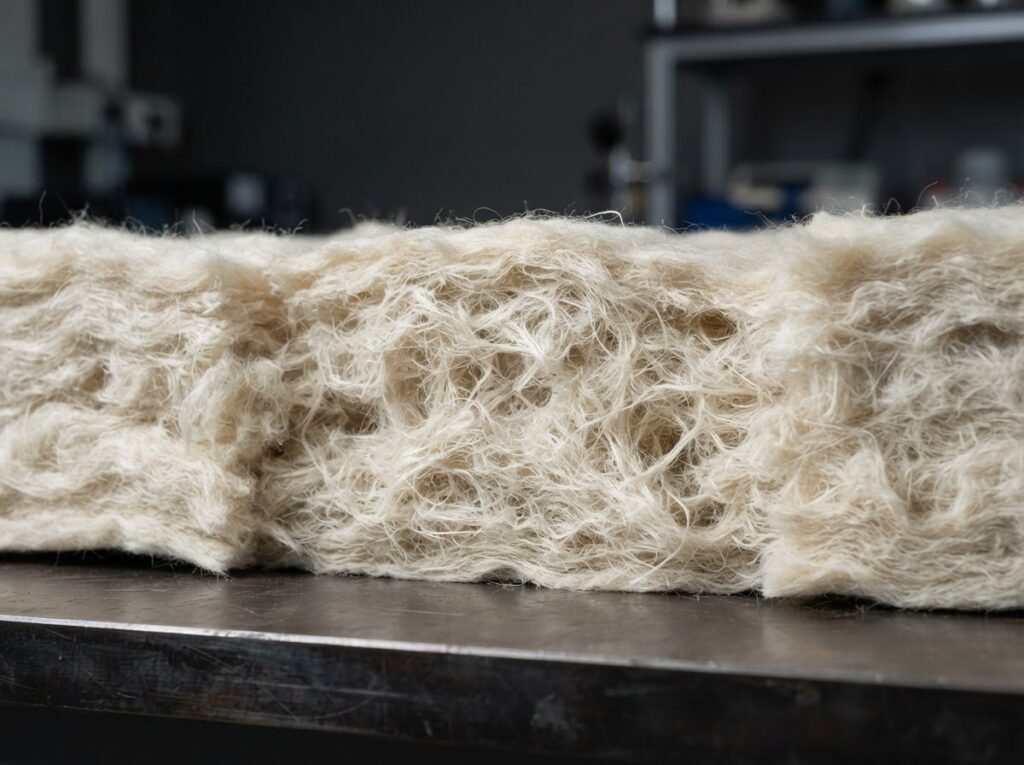
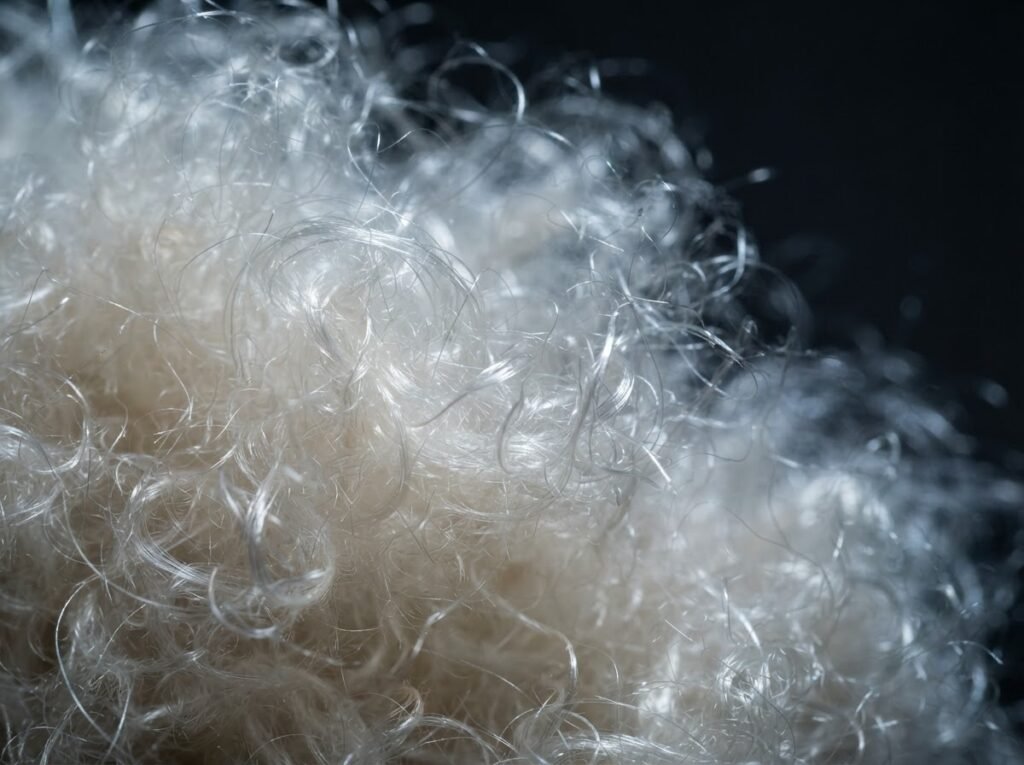
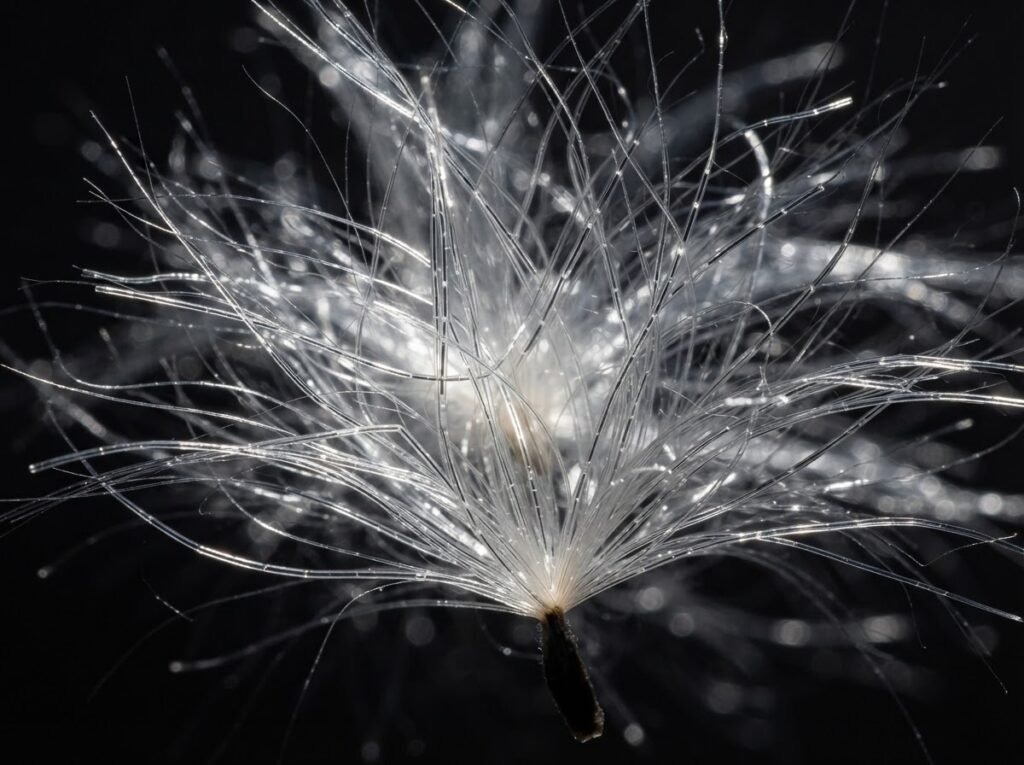
Backlit macro photograph of fine hollow milkweed floss fibers showing translucent lumen cores

Key properties

Development status

In Validation

Section 01

Material overview

Closed Cell™ is Tenzyle’s flagship material platform, developed from the floss of Calotropis gigantea — a wild-growing botanical known regionally as Akoa, Ak, Anant Mul and Madar.

The platform is the outcome of nearly two decades of validation work carried out with the Northern India Textile Research Association (NITRA) under the Ministry of Textiles’ National Technical Textiles Mission Project. That programme is what moved the fiber from a wild botanical to a technically characterized, commercially trademarked material.

Structurally, the fiber combines an unusually high hollow-core fraction with extreme fineness. The result is a material that behaves as an insulator by geometry rather than by additive — relevant wherever thermal performance must be achieved at minimum mass, and where synthetic fill is the incumbent.

Section 02

Key properties

Only characteristics supported by completed characterization work are listed. Properties still under test are marked as specification to be provided in the table below.

P.01

70% hollow core

A high closed-cell fraction traps still air inside the fiber, which is the mechanism behind its insulating behaviour.

P.02

Ultra-lightweight

At 0.89 g/cm³ the raw fiber is light enough that trapped air allows fiber masses to float on water.

P.03

Exceptional fineness

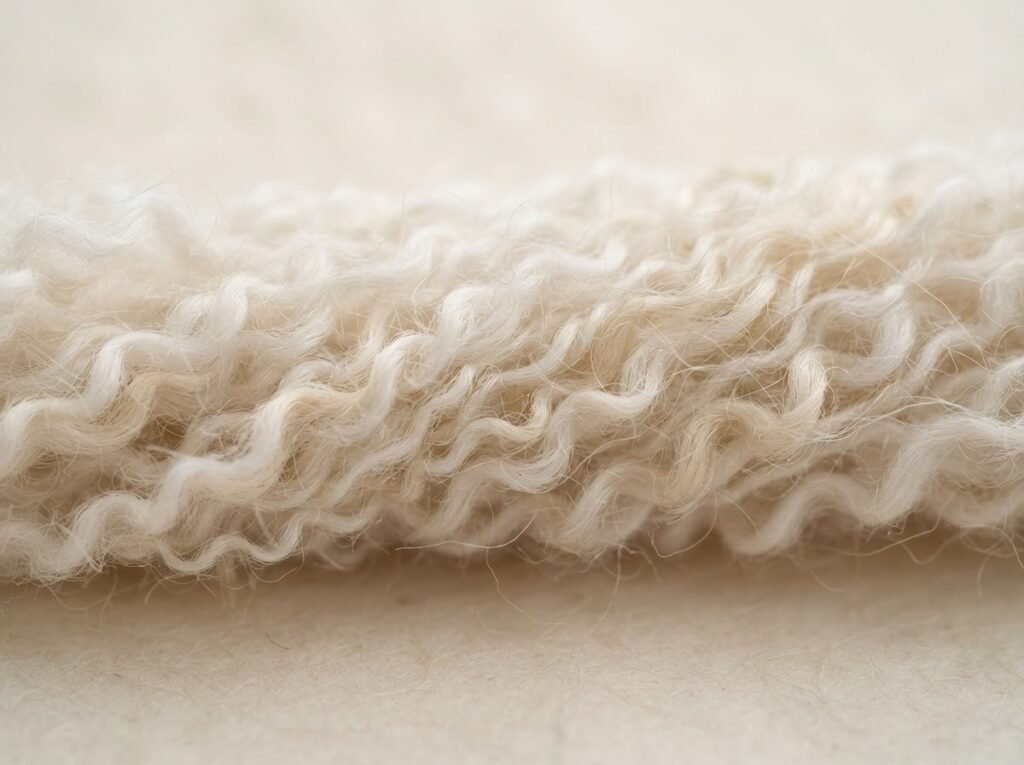
Measured as finer than pashmina, which supports premium hand-feel in spun and nonwoven technical textile formats.

P.04

Cold-weather performance

Characterized as effective to −20°C, with validation work extending toward −40°C conditions.

Section 03

Technical specifications

Values are stated only where testing is complete and a method can be named. Tenzyle does not publish estimated or indicative figures.

Technical parameter

Value

Method / standard

Material type

Natural seed-floss cellulosic fiber

—

Fiber architecture

70% hollow core

Optical microscopy

Specific density

0.89 g/cm³

Internal method

Tenacity

25 – 31 g/tex

NITRA

Moisture regain

11 – 12%

ASTM D2654

Thermal performance

Effective to −20°C; validation extending to −40°C

—

Fiber length

28 – 31 mm

NITRA

Fineness

Finer than pashmina

Comparative test

UV behaviour

High UPF properties reported

—

Where a parameter reads “Technical specification to be provided”, characterization for that property is either in progress or scoped to a partner engagement.

Section 04

Performance & validation

Closed Cell™ has been characterized through a long-running institutional programme with NITRA. Application-level validation with industrial partners is in progress.

In Validation
Development stage

Nearly two decades of fiber characterization with the Northern India Textile Research Association (NITRA).

Developed under the Ministry of Textiles’ National Technical Textiles Mission Project.

Trademarked as Closed Cell™ following technical recognition of the fiber.

Application-specific validation with OEM partners is in progress — results are released under technical engagement.

Section 06

Available formats

Fiber

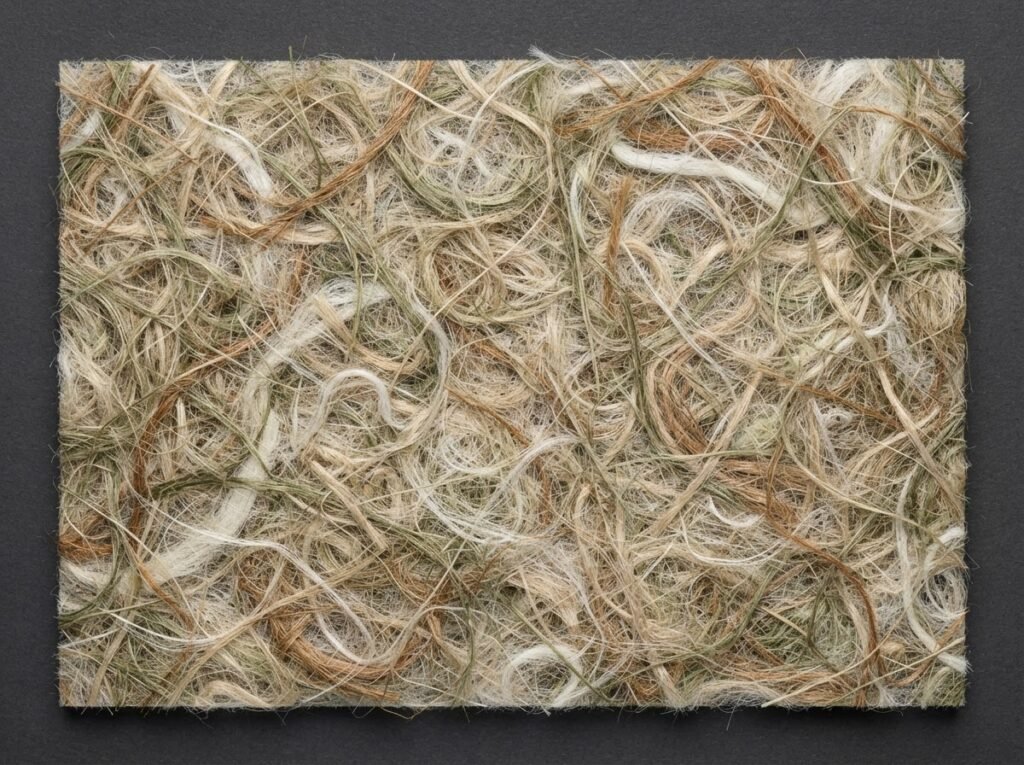
Nonwoven

Yarn

Blend

Format availability is confirmed at engagement level. Volumes and lead times are quoted against a defined specification.

Section 07

Technical data

Milkweed — technical data on request

Characterization is in progress. Current data, including the state of testing, is shared on request under a technical engagement.

Section 08 — Custom engineering

Need a specific performance profile?

Share your application and performance requirements and our team can assess the appropriate material platform.

Technical questions

How to read Tenzyle material data

What is a Technical Data Sheet?

A Technical Data Sheet (TDS) is a document listing a material’s measured properties, the test standard each value was measured against, and the conditions of the test. A TDS is what allows an engineering team to specify a material. Tenzyle publishes a TDS only for platforms where testing is complete.

In Validation means characterization and testing work is in progress for that platform and performance values have not yet been finalised. Technical data for platforms in validation is shared on request under a technical engagement, with the state of the work made explicit.

Natural fiber composites are materials in which a natural fiber provides the reinforcement phase within a polymer matrix. Composite performance is a laminate property — it depends on the fiber, the matrix, the fiber orientation and the processing route — so Tenzyle validates at laminate level rather than deriving part performance from fiber values alone.

Material validation is the process of confirming that a material meets defined acceptance criteria under the conditions of its intended application. It differs from characterization, which establishes what a material’s properties are. Validation establishes whether those properties are sufficient for a specific use.

Through the technical brief form. Technical data sheets are released for characterized platforms, and engagement-specific data is shared under a technical discussion. Where a property has not been tested, Tenzyle records it as specification to be provided rather than publishing an estimate.